
In-flight milestones
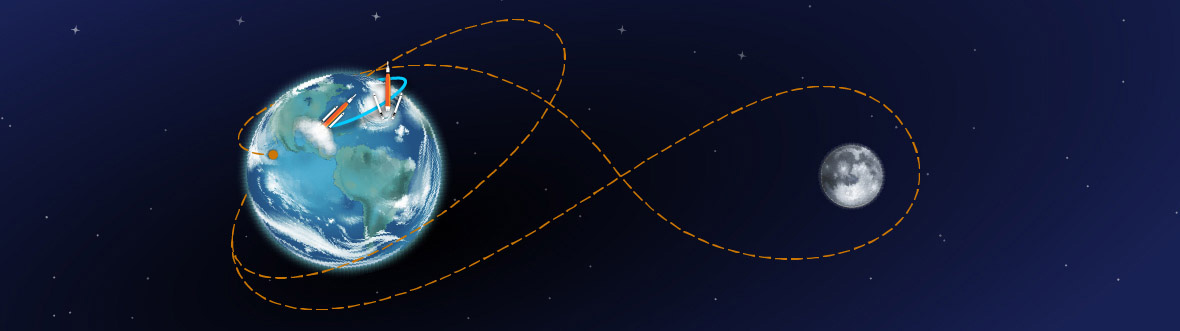
The trajectory of Artemis II. (Credit: Canadian Space Agency [CSA])
Consult the Artemis II daily logbook.
On this page
- Flight day 1: Leaving Earth
- Flight day 1: Proximity operations demonstration
- Flight days 1-10: Systems checkouts
- Flight day 2: Translunar injection
- Flight days 2-5: Heading to the Moon
- Flight day 6: Lunar flyby and observations
- Flight days 7-10: Return to Earth
Artemis II was the first crewed test flight of the Artemis campaign. The mission's objectives were to confirm all of the spacecraft's systems operated as designed with crew aboard in the actual environment of deep space. This was a critical step in establishing a sustainable human presence on the Moon and preparing for future missions to Mars. The crew also conducted science, both as scientists and research subjects, and made many lunar surface observations.
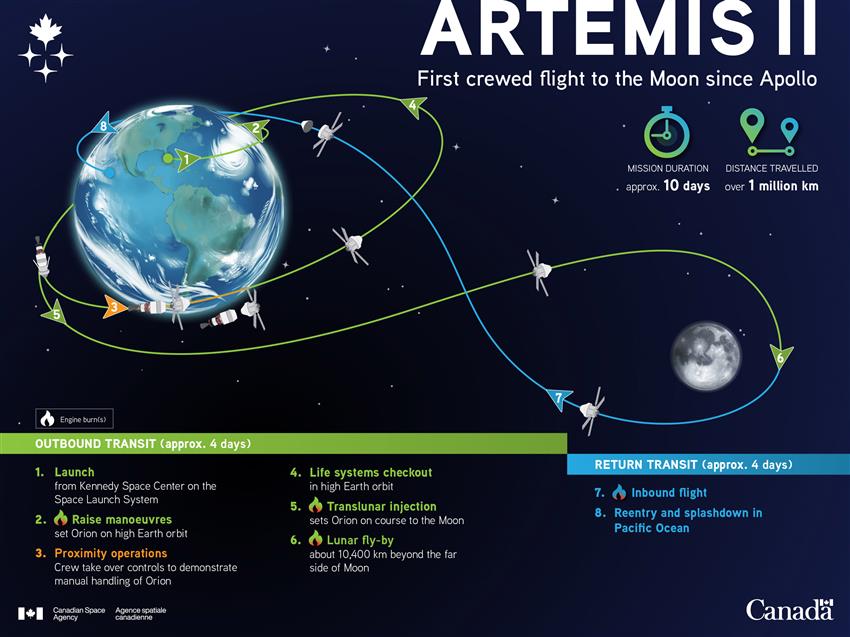
The trajectory of Artemis II and the in-flight milestones. (Credit: CSA)
Flight day 1: Leaving Earth
Watch
The role of the SLS rocket was to bring Orion into space. It performed multiple manoeuvres to raise its orbit around Earth and placed the crew on a lunar free return trajectory in which Earth's gravity naturally pulled Orion back home after flying by the Moon.
After launch, the SLS jettisoned the two side boosters, service module panels, and launch abort system, before the core stage engines shut down and the core stage separated from the upper stage and the spacecraft.
Once safely in orbit, the astronauts removed the orange Orion Crew Survival System suits they wore for launch and spent the remainder of the mission in normal clothes. They only put their spacesuits back on ahead of the re-entry into Earth's atmosphere and the splashdown.
With crew aboard this mission, Orion and the upper stage, called the interim cryogenic propulsion stage (ICPS), orbited Earth twice to ensure Orion's systems were working as expected while still close to home. The spacecraft reached an initial orbit, flying in the shape of an ellipse, at an altitude of about 185 km by 2,253 km. The orbit lasted a little over 90 minutes and included the first firing of the ICPS to maintain Orion's path. After the first orbit, the ICPS raised Orion to a high Earth orbit. This manoeuvre enabled the spacecraft to build up enough speed for the push toward the Moon.
The second, larger orbit took about 23.5 hours with Orion flying in an ellipse between about 185 km and 74,000 km above Earth. By contrast, the International Space Station flies a nearly circular Earth orbit about 400 km above our planet.
The second, larger orbit will take approximately 23.5 hours with Orion flying in an ellipse between about 185 km and 74,000 km above Earth. For perspective, the International Space Station flies a nearly circular Earth orbit about 400 km above our planet.
After the burn to enter high Earth orbit, Orion separated from the upper stage. The expended stage had one final use before it was disposed of through Earth's atmosphere – the crew used it as a target for a proximity operations demonstration to test Orion's manual piloting.
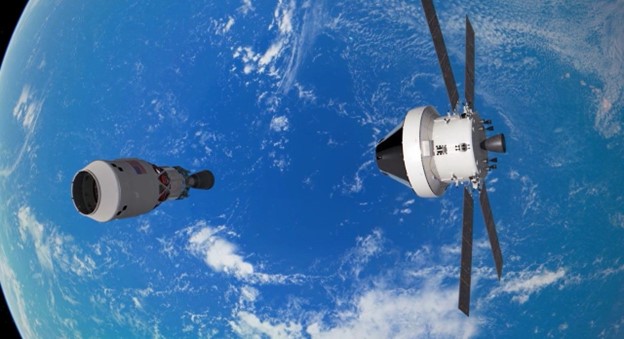
Simulation of Orion approaching the interim cryogenic propulsion stage during testing of Orion's manual piloting. (Credit: NASA)
Flight day 1: Proximity operations demonstration
This series of manoeuvres involved the crew flying Orion, approaching the ICPS, backing away, and manoeuvring for roughly 70 minutes. They used Orion's onboard cameras and the view from the spacecraft's windows to line up with the ICPS as they approached and backed away from it.
This demonstration provided data and experience that cannot be readily gained on the ground in preparation for critical rendezvous, proximity operations and docking, as well as undocking operations in lunar orbit.
After this demonstration, four international CubeSats, each twice the size of a shoebox, were ejected from the Orion stage adapter about five hours into the mission.

CSA astronaut Jeremy Hansen and his Artemis II crewmate Christina Koch during Post Insertion and Deorbit Operations training inside the Orion mockup at NASA's Johnson Space Center. The crew practised getting the Orion spacecraft configured once in orbit. (Credit: NASA/Mark Sowa)
Flight days 1-10: Systems checkouts
Following the proximity operations demonstration, the crew turned control of Orion back to flight controllers at NASA's Johnson Space Center and spent the remainder of the high Earth orbit verifying spacecraft systems in the space environment.
While still close to Earth, the crew assessed the performance of the life support systems necessary to generate breathable air and remove the carbon dioxide and water vapour produced when the astronauts breathe, sleep, talk, or exercise. The checkouts confirmed the full range of life support system capabilities and ensured readiness for the lunar flyby portion of the mission.
The communication and navigation systems were also verified to confirm they were ready for their trip to the Moon. While still in the elliptical orbit around Earth, Orion briefly flew beyond the range of GPS satellites and the Tracking and Data Relay Satellites of NASA's Space Network to allow an early checkout of agency's Deep Space Network (DSN) communication and navigation capabilities. When Orion travelled out to and around the Moon, Mission Control depended on the DSN to communicate with the astronauts, send imagery to Earth, and command the spacecraft.
On the remainder of the trip, astronauts continued to evaluate the spacecraft's systems, including demonstrating Earth departure and return operations, and practising emergency procedures.

A crescent Earth behind a crescent Moon as seen from the Orion spacecraft during the Artemis II mission in . (Credit: NASA)
Flight day 2: Translunar injection
Watch
After the main checkout procedures were completed, the decision was made to proceed with the journey to the Moon. Orion remained in high Earth orbit for about 25 hours before executing the translunar injection (TLI) engine burn that set it on course to the Moon. The TLI burn lasted 6 minutes and 5 seconds.
Flight days 2-5: Heading to the Moon
Watch
The service module, provided by the European Space Agency, provided that last push needed to send Orion and its crew on a trip of about four days around the backside of the Moon where they ultimately created a figure eight and did a flyby before returning home.
The crew had opportunities to connect with people on Earth during space-to-Earth video connections while they were heading to the Moon. Jeremy connected with Canadians during special events held at CSA headquarters.
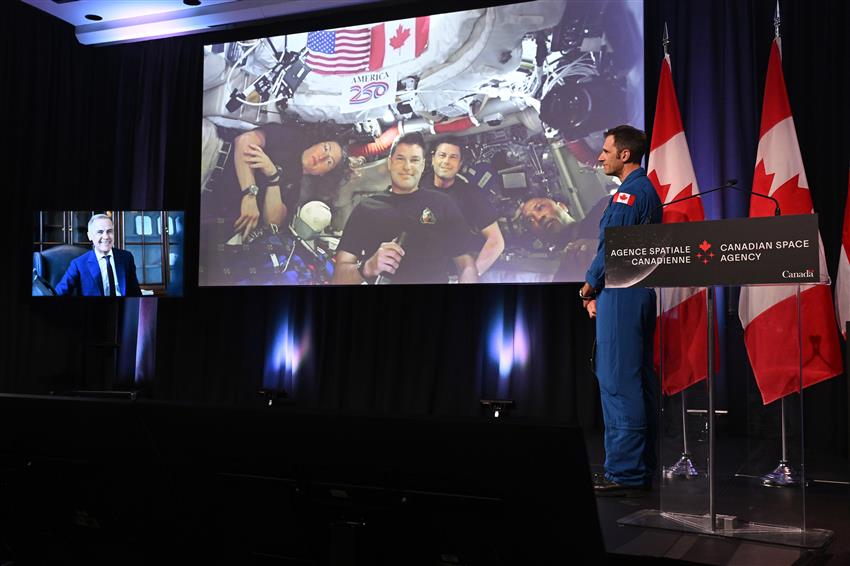
The Right Honourable Mark Carney, Prime Minister of Canada, talks to CSA astronaut Jeremy Hansen during a live Artemis II space-to-Earth connection hosted by CSA astronaut Joshua Kutryk. (Credit: CSA)
On flight day 5, Orion entered the lunar sphere of influence, the point at which the Moon is pulling on the spacecraft harder than Earth is.
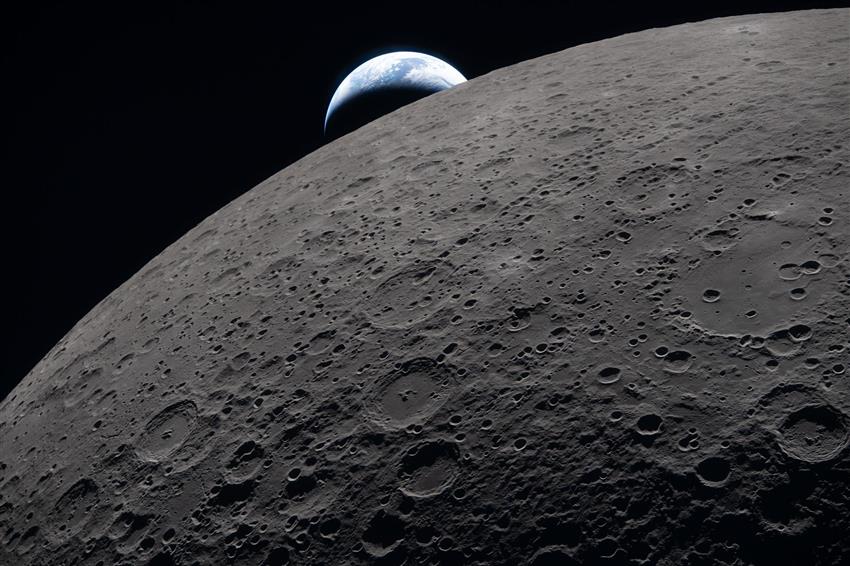
Earthset captured through the Orion spacecraft window at 6:41 pm ET, during the Artemis II crew's flyby of the Moon. The dark portion of Earth is experiencing nighttime. On Earth's day side, swirling clouds are visible over the Australia and Oceania region. (Credit: NASA)
Flight day 6: Lunar flyby and observations
Watch
On , Orion flew 6,544 km from the Moon's surface. From that vantage point, the Moon looked like a basketball held at arm's length. The crew saw Earth and the Moon from Orion's windows, with the Moon close in the foreground and Earth over 400,000 km in the background.
The Sun, Moon and the Orion spacecraft were aligned such that the crew saw about 20% of the Moon's far side.
For seven hours, the crew took turn observing and photographing geological features on the Moon like impact craters, ancient lava flows. The crew was the first humans to see, with the naked eye, parts of the Moon's far side never observed before, such as the full Orientale basin, Pierazzo crater and Ohm crater.
With real-time data analysis, guidance provided by CSA astronaut Jenni Gibbons, the capcom on console for the flyby, a team of scientists and the knowledge acquired through their geology training in Labrador, Iceland and in class to describe surface textures, shapes, and colours, providing valuable data for future exploration of the Moon.
Toward the end of the flyby, the crew observed a solar eclipse as Orion, the Moon, and the Sun aligned in such a way that the astronauts saw our star disappear behind the Moon for about an hour. During this period, the crew saw a mostly dark Moon. They used the opportunity to analyze the solar corona — the Sun's outermost atmosphere — as it peeked out from the edge of the Moon. The crew also looked for flashes of light from meteoroids striking the surface to gather insight on surface hazards.
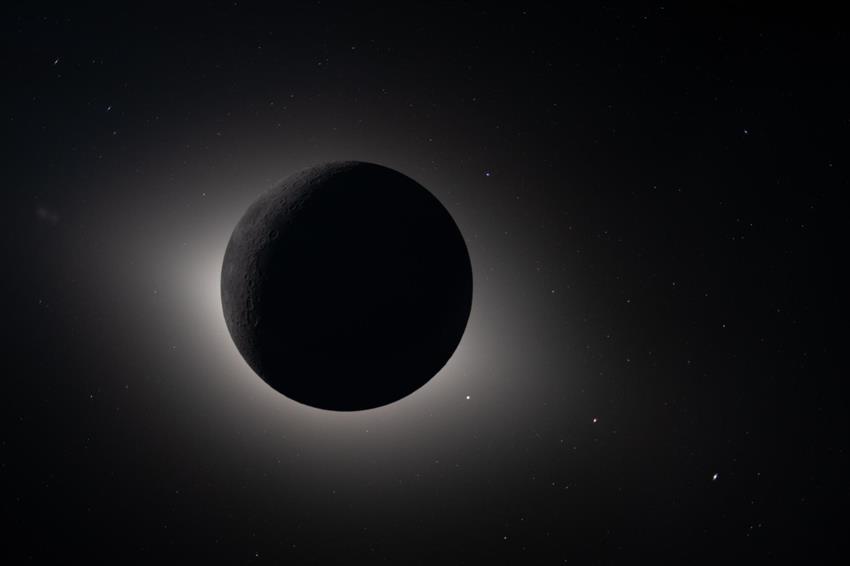
The Artemis II crew captured an image of a solar eclipse during their lunar flyby. From the crew's perspective, the Moon appears large enough to completely block the Sun. (Credit: NASA)
When Orion passed behind the Moon, the mission experienced a planned communications blackout lasting 40 minutes while the Moon blocked the radio signals between the Deep Space Network and the spacecraft.
On flight day 7, Orion left the lunar sphere of influence en route back to Earth.
The flyby in numbers
Maximum distance from Earth: 406,773 km, surpassing the Apollo 13 distance record by about 6,600 km
Distance beyond the far side of the Moon: 6,544 km
After travelling over 1 million kilometres to the Moon and back, the Artemis II crew returns home. (Credits: CSA, NASA)
Transcript of the video named Artemis II daily logbook 10: Splashdown! Jeremy Hansen back on Earth!
Flight days 7-10: Return to Earth
Watch
On flight day 7, Orion started making its four-day journey back to Earth.
Instead of requiring propulsion on the return, the fuel-efficient "free return trajectory" harnessed the Earth-Moon gravity field, ensuring that after its trip around the far side of the Moon, Orion was pulled back naturally by Earth's gravity.
On , once the Crew Module separated from the Service Module, it re-entered Earth's atmosphere at 35 times the speed of sound. The heat shield and the friction with the atmosphere helped bleed out a lot of the speed. As the spacecraft got down into the thicker parts of the atmosphere, drogue chutes came out before the three main parachutes to slow it down for a safe landing.
The Orion spacecraft plummeted back to Earth and splashed down in the Pacific Ocean on . In this video, experience the nerve-wracking journey from the inside of the capsule alongside the Artemis II crew. (Credits: CSA, NASA)
Transcript of the video "As if you were there: Return to Earth with the Artemis II crew"
Less than 15 minutes after re-entry, the Crew Module splashed down in the Pacific off the coast of San Diego, California. After travelling more than 1.2 million km in 9 days, 1 hour and 32 minutes, the Orion capsule and its crew were recovered by NASA and the U.S. Navy, ending this historic mission around the Moon.
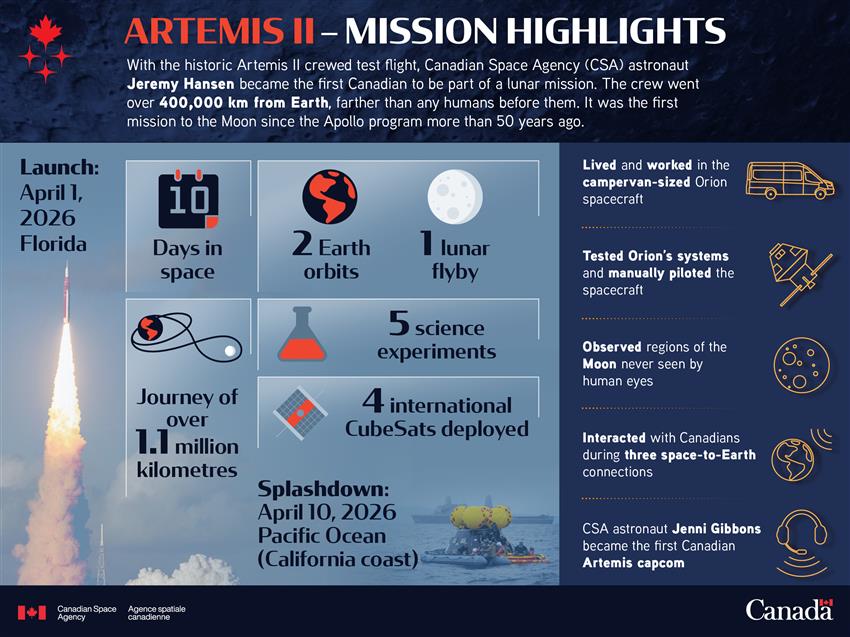
This infographic showcases highlights of the Artemis II crewed test flight from to . (Credit: CSA)