
Preparing the future of Moon exploration
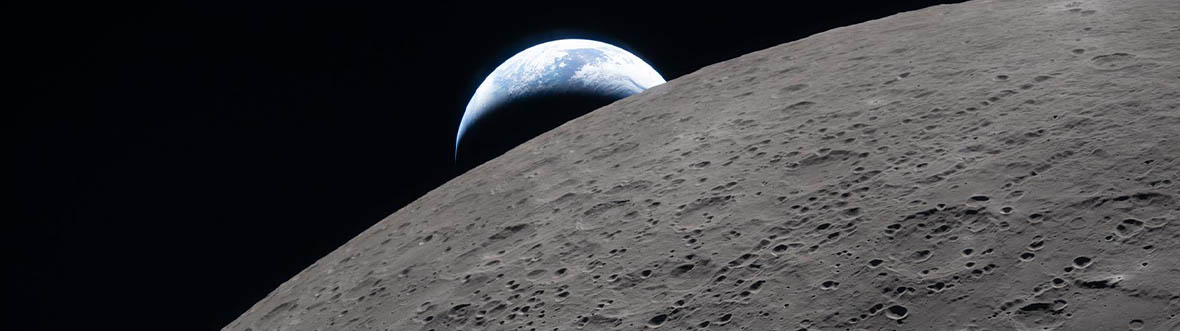
A close-up of the lunar surface with a crescent Earth in the distance.
Since , the International Space Station has demonstrated humanity's ability to live and work in space, just 400 km away from Earth. As we prepare to venture much farther, nearly 1,000 times that distance to get to the Moon, relying on a steady supply of food, materials and other resources from Earth would be neither feasible nor affordable. Long-term lunar missions will require innovative systems and technologies that will allow the responsible and sustainable use of resources found on the lunar surface to produce water, oxygen, materials, and fuel.
Many fields are recognized as critical to the future of deep-space exploration, including systems and technologies to help:
- manage regolith (lunar soil)
- generate and distribute power on the surface of the Moon
The Canadian Space Agency (CSA) has awarded 4 contracts totalling $2M to Canadian companies Canadian Strategic Missions Corporation, SpaceDIRT and Volta Space Technologies Inc. for architecture studies. Over the next 10 months, the companies will assess what is needed in those two fields to successfully carry out human and robotic missions on the lunar surface, from operations to technologies. Through these contracts, the CSA aims to identify potential Canadian contributions to lunar exploration, leveraging expertise from across the country.
The studies will notably assess how existing Canadian power generation and resource management technologies can be adapted to support Moon exploration objectives, considering the challenging conditions of deep space. Indeed, systems that will be used on the surface must be able to work in tandem with other components, withstand extreme temperatures (from 120 °C to -200 °C during the roughly two-week long lunar night), and deal with radiation exposure, abrasive lunar dust, communications delays, and so on.