
From Apollo to Artemis: The evolution of crewed lunar missions
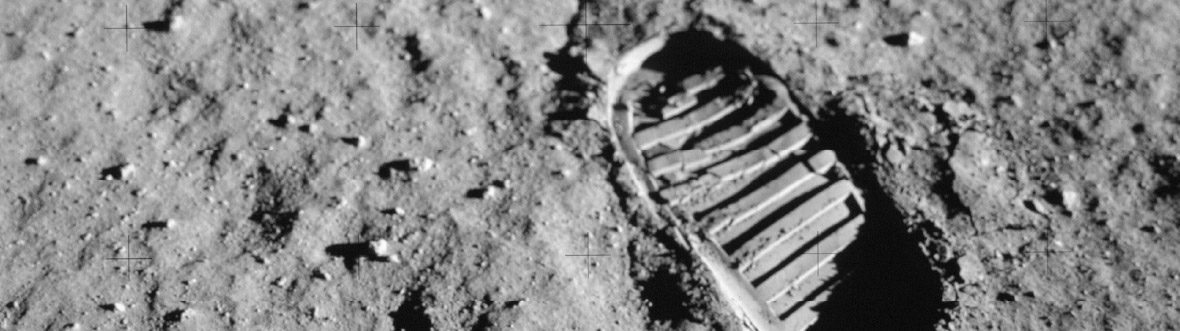
Comparing crewed lunar missions
In , NASA's Apollo program made history by landing the first humans on the Moon. The Apollo missions proved that sending humans to explore another celestial body was possible and inspired generations to dream bigger. More than 50 years later, the Artemis campaign is returning humans to the Moon, this time with new goals focused on developing a sustained presence on the lunar surface and preparing for future missions deeper into space.
Of the 12 crewed Apollo missions of the s and s, six landed successfully on the Moon. Today's Artemis campaign builds on that legacy with more ambitious plans: staying longer, learning more, and working together with international and commercial partners.
On this page
Canada's contributions
During the Apollo era, Canada played an important supporting role in different fields. Canada's involvement in Artemis is broader and multifaceted, reflecting the nation's growing expertise in space robotics, science, and astronautics. The Artemis campaign aims to build expertise for a lasting return to the Moon, planning for several crewed and uncrewed missions as well as the construction of Gateway, a space station in orbit around the Moon. Gateway will be designed to welcome crews of four astronauts at a time, who will occasionally travel to the lunar surface to conduct science and test new technologies.
Comparative table – Canada's contributions
| Program | Apollo | Artemis |
|---|---|---|
| Contributions |
|
|

Astronaut Edwin E. Aldrin Jr. prepares to deploy the Early Apollo Scientific Experiments Package (EASEP) during the Apollo 11 mission. Photo credit: NASA

An artist's concept of Gateway, a space station in orbit around the Moon. (Credits: NASA, Alberto Bertolin, Bradley Reynolds)
Objectives
The Apollo and Artemis programs are both extremely ambitious, but they serve different objectives. The Apollo program achieved a historic first – sending humans to the Moon – in a context of urgency and intense pressure. The Artemis program, on the other hand, aims to develop the capability to explore the Moon in a long-term and sustainable way. With the Artemis missions, the role of human exploration will expand to include more time spent on and around the Moon as a steppingstone for future deep-space missions to Mars.
Comparative table – Objectives
| Program | Apollo | Artemis |
|---|---|---|
| Objectives |
|
|

Astronaut Harrison Schmitt stands beside a giant split boulder on the Moon during Apollo 17. (Credit: NASA)

The entire Artemis II crew, including CSA and NASA backups, as well as NASA personnel during geology field training in Iceland. (Credit: NASA/Robert Markowitz)
Technology
With more than 50 years between them, Apollo and Artemis show just how far space technology has come. Artemis uses modern tools, better materials, and smarter systems to make missions safer and more effective than ever before.
In this section
Vehicles
Rockets, spacecraft, and landers for Apollo and Artemis were each built to meet the needs of their time. Apollo missions typically lasted one to 12 days, while Artemis missions are designed to facilitate longer surface stays.
Launch rockets
Comparative table – Launch rockets
| Program | Apollo | Artemis |
|---|---|---|
| Launch rocket | Saturn V | Space Launch System (Artemis I-III) |
| Propulsion | 3 stages | 1.5 stages |
| Engines | First stage: 5 F-1 engines |
Core stage: 4 RS-25 engines + 2 solid rocket boosters Interim cryogenic propulsion stage: 1 RL10B-2 engine |
| Thrust | 33.8 million newtons | 39.1 million newtons |
| Height | 110.6 m | 98 m |
| Diameter | 10.1 m | 8.4 m |
| Loaded weight | 2.9 million kg | 2.6 million kg |

The Apollo 11 Saturn V first stage (left) and Artemis I SLS core stage (right) in horizontal position in NASA's Vehicle Assembly Building. (Credit: NASA)

The Apollo 11 Saturn V first stage (left) and Artemis I SLS core stage (right) in vertical position in NASA's Vehicle Assembly Building. (Credit: NASA)
Crew modules
Comparative table – Crew modules
| Program | Apollo | Artemis |
|---|---|---|
| Crew capsule | Command module | Orion crew module |
| Crew capacity | 3 astronauts | 4 astronauts |
| Habitable space | 5.95 m3 | 9 m3 |
| Mission duration | Up to 14 days | Up to 21 days |
| Power | Fuel cells | Four solar arrays housing nearly 15,000 solar cells and a tip-to-tip span of 18.6 metres when deployed |
| Service module | Provided electrical power, propulsion, fuel, oxygen and storage for various consumables | Built by the European Space Agency; provides electrical power, propulsion, thermal control, air and water |

The Apollo 10 spacecraft (left) and Artemis I's Orion capsule with its service module (right) inside NASA's Neil Armstrong Operations and Checkout Building. (Credit: NASA)
Rovers
Comparative table – Rovers
Rovers have played and continue to play an important role in Moon exploration. Several countries are developing different types of vehicles, including Canada and its utility rover, to contribute to international Moon exploration efforts.
| Program | Apollo | Artemis |
|---|---|---|
| Rovers |
|
|

Astronaut James B. Irwin, lunar module pilot, works at the Lunar Roving Vehicle during the first Apollo 15 lunar surface extravehicular activity (EVA) at the Hadley-Apennine landing site. (Credit: NASA)

An artist's concept design of NASA's Lunar Terrain Vehicle. (Credit: NASA)
Spacesuits
The Apollo program spacesuits were designed to allow astronauts to take part in short lunar missions but introduced several limitations. The Artemis program suits are designed for long-duration use and will provide astronauts with greater mobility.
Comparative table – Spacesuits
| Program | Apollo | Artemis |
|---|---|---|
| During launch/In a crew module |
|
|
| On the Moon surface |
|
|
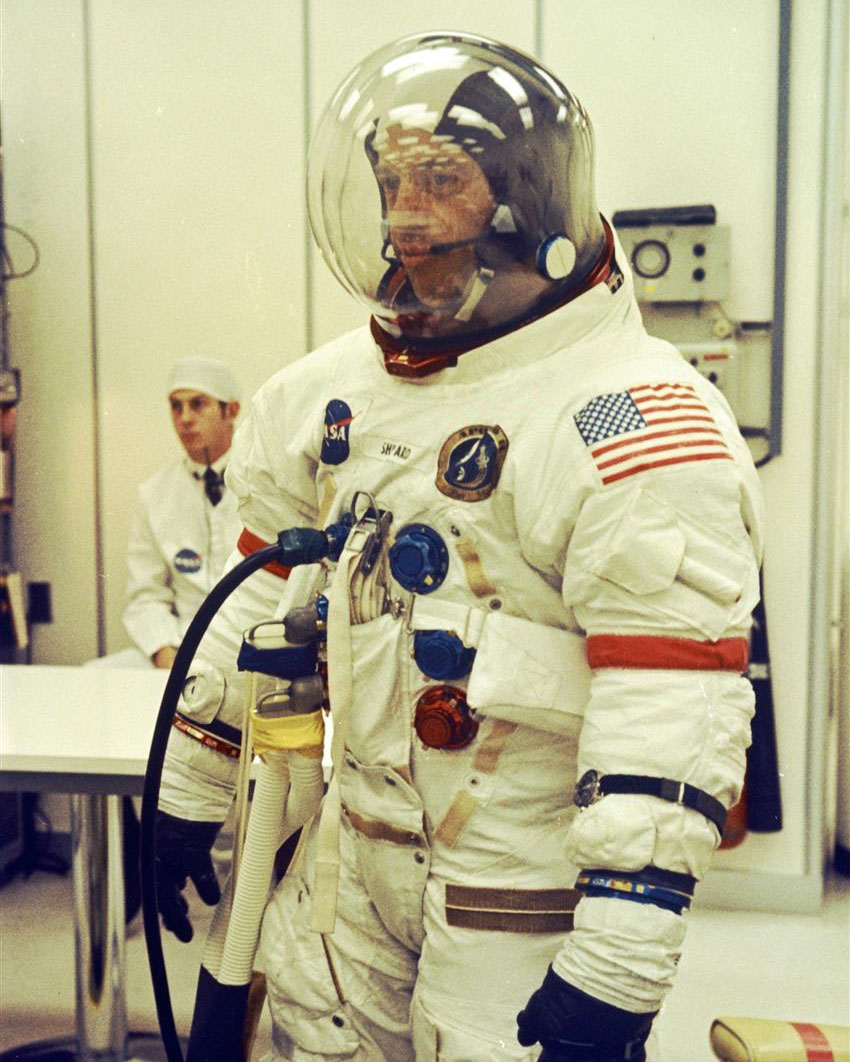
NASA's astronaut and Apollo 14 mission commander, Alan B. Shepard Jr., during spacesuit checks before the mission launch. (Credit: NASA)
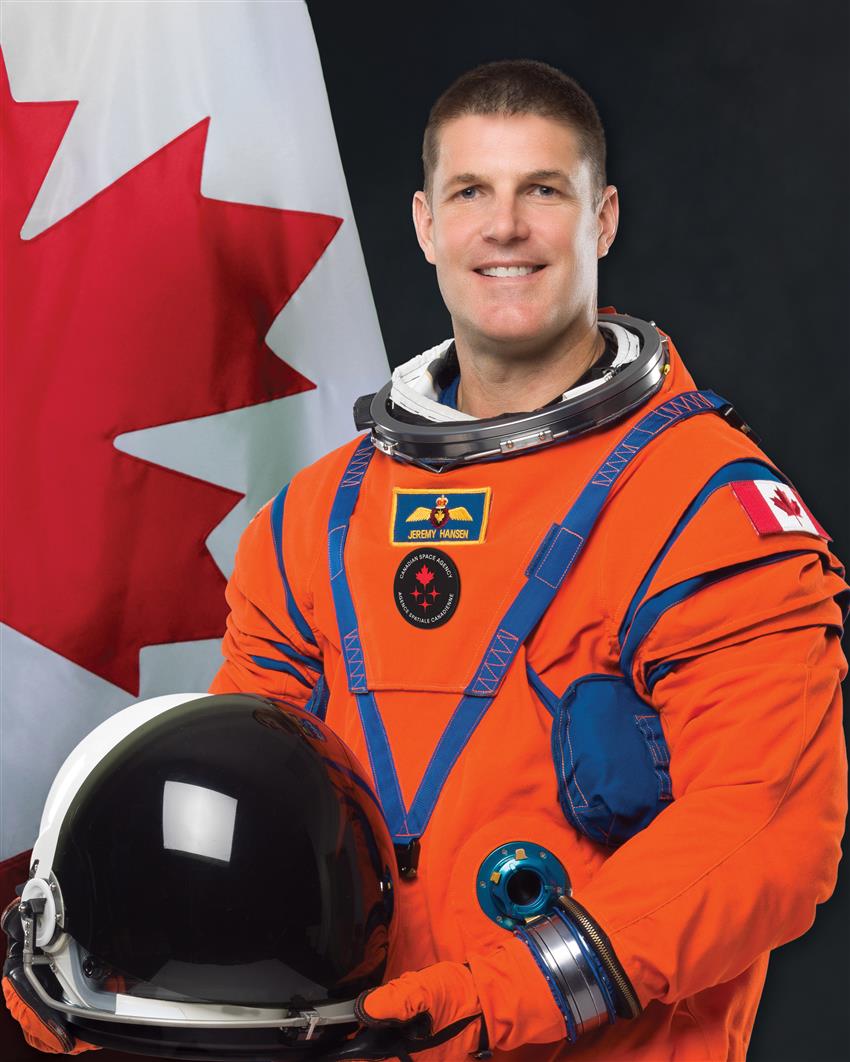
CSA astronaut Jeremy Hansen is wearing the Orion Crew Survival System for a photo shoot. This suit is used for the launch and reentry in the atmosphere during the Artemis II mission. (Credit: NASA)
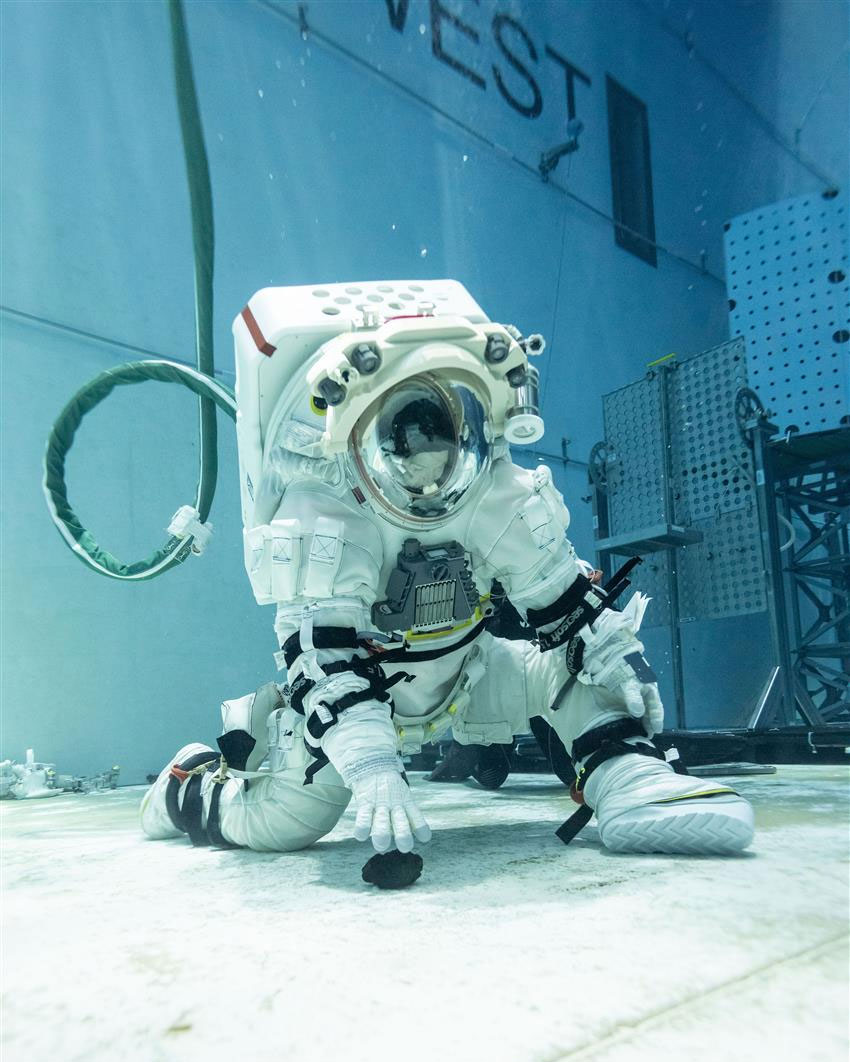
CSA astronaut Jenni Gibbons practises simulated lunar tasks underwater while wearing Axiom Space's lunar spacesuit (AxEMU). This suit will be used by astronauts during future Artemis missions while performing duties on the Moon's surface. (Credit: NASA)
Science
The scientific goals of lunar exploration have grown alongside the technology. Apollo missions collected Moon rocks and ran experiments to help us understand the Moon's history. Scientists believed that the lunar surface was devoid of water. By later re-examining rocks collected during the Apollo missions with new techniques and instruments, researchers found that there was water ice under the surface of the Moon. Artemis will build on that work with new tools and will explore new scientific avenues.
Comparative table – Science
| Program | Apollo | Artemis |
|---|---|---|
| Projects/Experiences |
|
|
Tara Hayden, a young lunar geology researcher from Western University in Ontario, explains how astronauts' observations and rock samples taken from the Moon's surface will advance lunar water research. Water will be critical for future missions to the Moon. (Credits: CSA, NASA, Western University, European Space Agency/Skidmore, Owings & Merrill)
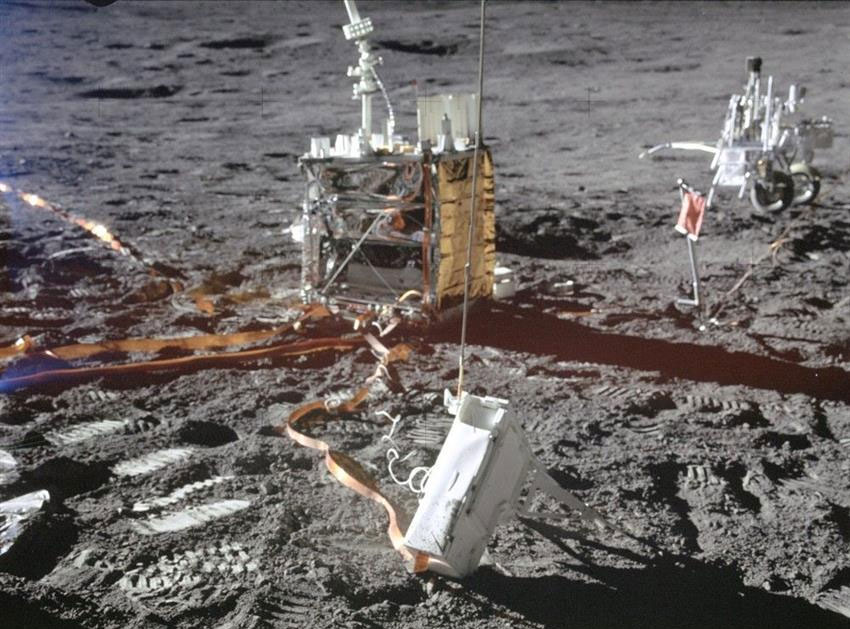
Apollo Lunar Surface Experiments Package (ALSEP) active seismic and central station units, with the modular equipment transporter in the background, ready for deployment on the Moon by Apollo 14 astronauts. (Credit: NASA)

Scientists and engineers tested NASA's Lunar Environment Monitoring Station instrument suite in a "sandbox" of simulated Moon "soil" for Artemis III. (Credit: NASA)
Crews
Who gets assigned to space missions to the Moon has also changed. In the Apollo era, astronauts were all American men, mostly military pilots. Artemis reflects a diverse, international and multidisciplinary world.
Comparative table – Crews
| Program | Apollo | Artemis |
|---|---|---|
| Crews |
|
|

The Apollo 17 crew (left) and Artemis II crew (right) stand on their respective launch pad access arms over 50 years apart, preparing for historic Moon missions. (Credit: NASA)
Training
Training for lunar missions has always been rigorous, evolving with technology and mission goals. From practising landing manoeuvres in simulators to preparing for long‐duration spaceflight, each mission has built upon the last. Emergency drills were a priority of the Apollo program, and it is still the case for the Artemis campaign.
Comparative table – Training
| Program | Apollo | Artemis |
|---|---|---|
| Flight operations |
|
|
| Scientific training |
|
|
Physical conditioning
Physical conditioning remains key to prepare for space travel and lunar surface activities, regardless of the era.
Comparative table – Physical conditioning
| Program | Apollo | Artemis |
|---|---|---|
| Physical conditioning |
|
|

Apollo 12 astronauts Charles Conrad Jr., Richard F. Gordon Jr., and Alan L. Bean practise water egress training in the Gulf of Mexico in . (Credit: NASA)
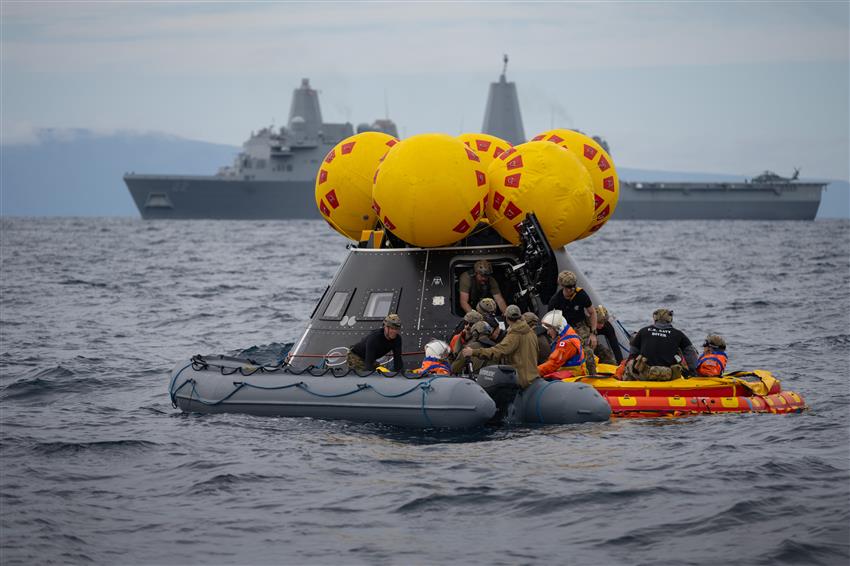
The Artemis II crew, including CSA astronaut Jeremy Hansen and his backup Jenni Gibbons, takes part in a recovery test off the coast of San Diego. (Credit: NASA/Ken Allen )
Jeremy Hansen's vlogs
Watch the Destination Moon, with Jeremy Hansen vlog series for a behind-the-scenes look at the mission preparation and training.