
– Departmental Results Report
On this page
Copyright information
© His Majesty the King in Right of Canada,
represented by the Minister of Innovation, Science and Industry,
ISSN: 2371-7777
At a glance
This Departmental Results Report details the Canadian Space Agency (CSA)'s actual accomplishments against the plans, priorities and expected results outlined in its – Departmental Plan.
Key priorities
The CSA identified the following key priorities for -:
- Propelling space exploration through the Lunar Program
The CSA prioritizes international collaboration as part of its plans to return to the Moon and establish a permanent presence to drive space exploration, bringing economic growth, job opportunities, and innovation to the country, while advancing scientific knowledge and improving the lives of Canadians. - Delivering space-based data to support Canada's sustainable development ambitions
The CSA aims to generate innovative solutions for the conservation of biodiversity and climate change monitoring, mitigation and adaptation, by developing and operating satellites that acquire Earth observation (EO) data to support the response to critical challenges like wildfires and fostering the development of applications and services for Canadians. - Positioning the Canadian space ecosystem for prosperity
The CSA is making smart investments in Canada's space industry and fostering the next generation of space entrepreneurs by funding innovative SMEs. This will allow Canada's space industry to participate in the rapidly growing and evolving global space economy.
Highlights for the CSA in -
- Total actual spending (including internal services): $634,726,541
- Total full-time equivalent staff (including internal services): 987
For complete information on the CSA's total spending and human resources, read the Spending and human resources section of its full departmental results report.
Summary of results
The following provides a summary of the results the department achieved in – under its main areas of activity, called “core responsibilities.”
Core responsibility: Canada in Space
Canada in Space highlights
Actual spending: $549,195,233
Actual full-time equivalent staff: 516
Canada remains a leading space-faring nation
Canada's advanced space robotics capabilities are increasingly in demand – in –, the CSA continued to operate Canadarm2 on the International Space Station (ISS) and advanced the development of Canadarm3, an essential contribution to the Gateway that will sustain human presence on the Moon. In preparation for the historic Artemis II mission, Canadian astronaut Jeremy Hansen and his official back-up Jenni Gibbons continued planned training and medical requirement testing. Canadian astronaut Joshua Kutryk also continued to prepare for his upcoming long-duration mission to the ISS. As part of the Lunar Exploration Accelerator Program (LEAP), the first Canadian lunar rover and the lunar utility vehicle projects also made good progress.
Canadian scientists expanded our understanding of the universe with 16 new General Observation programs on the James Webb Space Telescope, a powerful and complex space telescope. Building on the investments made for the Webb Space Telescope, the CSA supported the development of cryoharnesses – a crucial electrical cable – for the upcoming Atmospheric Remote-sensing Infrared Exoplanet Large-survey (Ariel) mission led by the European Space Agency (ESA) of which the CSA is a cooperating member country.
The CSA began the construction of its Sample Curation Facility, where Canadian scientists will be able to study and experiment on Canada's sample from the asteroid Bennu, which was collected as part of the OSIRIS-REx mission. Canada's contributions in space science and technology, such as the OSIRIS REx Laser Altimeter (OLA) instrument, earned Canada the privilege of becoming the fifth country in the world to receive a sample collected from outer space.
Space information and technologies improve the lives of Canadians
Canadian (EO) satellites – RADARSAT-2, RADARSAT Constellation Mission (RCM), and SCISAT – continued to provide invaluable data for the benefit of our planet and the day-to-day lives of Canadians, as well as contribute to international initiatives including International Charter for Space and Major Disasters, bringing satellite data to help emergency responders. The CSA supported the advancements of projects through Research Opportunities for Satellite Earth Observation (ROSEO), a smartEarth initiative aimed at developing innovative solutions using satellite data in a variety of fields that will help solve key challenges here on Earth.
The CSA also advanced RADARSAT+, an initiative aimed at ensuring continuous, efficient, and sustainable access to critical and high-quality EO data for Canadians (agriculture, maritime surveillance, disaster management, etc.) and to uphold our international collaboration commitments. As the world's second- largest country, Canada's need for EO data and territorial surveillance will only continue to grow. In -, five Canadian companies completed technology R&D projects in support of future radar EO projects. These CSA-funded projects allowed the CSA to advance on its objective to design a next-generation satellite system to succeed the RCM, which was announced in . Satellite EO data is used to understand, monitor and protect our planet, particularly to assess the impacts of climate change, helping us adapt and build resilience in vulnerable areas such as Canada's North. The CSA is working closely with federal departments, industry, and international partners to ensure continued access to reliable satellite EO data that supports critical services for Canadians. About 40 services delivered by federal departments and private companies rely on Canadian Synthetic Aperture Radar (SAR) data daily, such as the surveillance of illegal fishing, assisting disaster relief efforts in areas affected by wildfires, and ensuring safe travel to deliver vital supplies to isolated communities in the North. The Department of National Defence and the Canadian Armed Forces are among the biggest users of RCM imagery.
A Canadian company was awarded a contract for the design of Canada's WildFireSat constellation, a state-of-the-art initiative to help monitor and manage wildfires globally. Investments in WildFireSat will strengthen Canada's ability to build, test, and assemble small satellites, and support the ongoing growth and diversification of the Canadian space sector. WildFireSat will improve our ability to defend Canadian communities – especially the more vulnerable remote northern communities located in forested areas – and enable more effective decisions about evacuations. With earlier and more accurate information related to wildfire and smoke activity, decision makers are better equipped to respond and mitigate negative outcomes, saving the Canadian economy $1-5 billion over its 5-year mission life. Additionally, the CSA continued developing the High-altitude Aerosols, Water vapour, and Clouds (HAWC) initiative, a mission aimed at providing critical data to support the prediction of extreme weather, climate modelling, and the monitoring of natural disasters.
Canada's investments in space benefit the Canadian economy
This year, as part of the CSA's Space Technology Development Program (STDP), the CSA invested $15 million to support Canadian companies advancing projects in the fields of propulsion technologies, EO, and quantum technologies. Quantum has the potential to revolutionize computing, communications, and sensing by tackling complex problems that are beyond the reach of classical technology. By extending quantum capabilities to space applications, the CSA contributes to building a more secure and resilient infrastructure for future space missions and systems.
In –, the CSA supported academic scientific research, including the Flights and Fieldwork for the Advancement of Science and Technology (FAST) funding initiative, which enabled Canadian post-secondary students to develop and maintain their expertise in space-related fields in Canada. The CSA also helped launch six meteorological balloons under the STRATOS Program, a flight campaign that aims to validate new technologies and perform scientific experiments in a near-space environment.
In –, the CSA empowered and inspired young people in Canada to become the scientists, explorers, and problem solvers of tomorrow by leading virtual workshops, organizing speaker events and developing activities for youth.
For more information on how the CSA contributed to Canada in Space, read the “Results – what we achieved” section of the Departmental Results Report.
From the Minister

It is my pleasure to present the – Departmental Results Report for the Canadian Space Agency (CSA). The CSA empowers Canadian businesses to be innovative and compete in the global space economy. Our space exploration missions and EO data contributed to improvements in the quality of life of Canadians by providing our partners with reliable and high-quality space-based data and services.
In –, the CSA cemented Canada's role in sustaining human presence on the Moon and supporting security and strategic interests by accelerating the development of Canadarm3, a vital contribution to the Gateway space station. The LEAP also continued to fuel growth in the space sector, with Canadian companies delivering cutting-edge scientific instruments and ground-breaking technologies.
The CSA also advanced RADARSAT+, pioneering next-generation SAR technology. Our EO capacity is vital to national resilience, climate monitoring, and the delivery of critical services by federal partners. The CSA also advanced the design of Canada's WildFireSat constellation, which will deploy seven microsatellites to provide daily wildfire monitoring, safeguarding Canadian communities and supporting frontline responders. The mission is a collaboration with Natural Resources Canada and Environment and Climate Change Canada and is expected to save the Canadian economy between $1 billion and $5 billion over its first five years of operations.
Furthermore, the CSA is driving commercial innovation and supporting the development of future-ready Canadian space technologies with global impact through new STDP investments.
We invite you to read this report to learn more about how the ISED Portfolio is working together with Canadians of all backgrounds and in all regions—urban and rural—to position Canada as a leader in the global economy.
Results – what we achieved
Core responsibilities and internal services
Core responsibility: Canada in Space
Description
The CSA coordinates the space policies and programs of the Government of Canada; ensures that other government departments and agencies have access to space data, information, and services to deliver on their mandates; plans, directs and manages projects relating to scientific or industrial space research and the development of space science and technology; promotes the transfer and diffusion of space technology to and throughout Canadian industry; and encourages commercial exploitation of space capabilities, technology, facilities and systems. The CSA also aims to build Canada's capacity and engage the next generation of space scientists and engineers, and provide opportunities to inspire young people to develop the required skills and to pursue studies and careers in science, technology, engineering and math (STEM).
Quality of life impacts
The CSA's core responsibility Canada in Space contributes directly to the “Prosperity” domain of the Quality of Life Framework for Canada, and, more specifically, “Firm dynamism,” “Employment,” and “Child, student and adult skills.” This core responsibility involves supporting the Canadian space sector, and creating capacity through research and development, skill building, and youth in STEM programming. Moreover, by ensuring that other government departments and agencies have access to space data, information, and services, the CSA is supporting them in contributing to the “Society” and “Environment” domains of the framework.
Progress on results
This section details the department's performance against its targets for each departmental result under Core responsibility Canada in Space.
Table 1: Canada remains a leading space-faring nation
| Departmental Result Indicators | Target | Date to achieve target | Actual Results |
|---|---|---|---|
| Canada's rank among Organization for Economic Co-operation and Development nations on the citation score of space-related publications | 13 |
|
|
| Ranking of Canadian Government civil space budget as a share of GDP among OECD and BRIC nations | 22 |
|
Table 2: Space information and technologies improve the lives of Canadians
| Departmental Result Indicators | Target | Date to achieve target | Actual Results |
|---|---|---|---|
| Number of Canadian space technologies adapted for use on Earth or re-use in space | 37 |
|
|
| Number of services offered to Canadians dependent on space data | 115 |
|
Table 3: Canada's investments in space benefit the Canadian economy
| Departmental Result Indicators | Target | Date to achieve target | Actual Results |
|---|---|---|---|
| Value of gross domestic product (GDP) of the Canadian space sector | $2.8B |
|
|
| Number of employees in the Canadian space sector | 12,000 |
|
The space sector plays an important role in the Canadian economy. The sector typically generates $5.0B in revenues and supports over 25,000 jobs (direct, indirect, and induced). Additional information on the economic contribution of the space sector can be found in the CSA's annual State of the Space Sector Report.
The Results section of the Infographic for the CSA on GC Infobase page provides additional information on results and performance related to its program inventory.
Details on results
The following section describes the results for Canada in Space in – compared with the planned results set out in CSA's departmental plan for the year.
Results achieved
Canada remains a leading spacefaring nation
Low Earth orbit
- The CSA continued to prepare for Canadian astronaut Joshua Kutryk's upcoming long-duration mission to the International Space Station (ISS) by providing support for his pre-flight medical requirements, training, exercise, and nutrition regiment. He will become the fourth Canadian astronaut to participate in a long-duration mission on the ISS.
- The CSA supported ISS operations, maintenance and engineering activities throughout the year by operating Canadarm2 and by conducting science and technology research on board the space station. In –, the Mobile Servicing System allowed for the capture, release and unloading of four resupply vehicles bringing crucial cargo to the ISS and supported 17 science activities and payloads. Over 154 Canadian highly qualified personnel (HQP) took part in these activities.
Moon
- As a partner in the Artemis program, Canada continued to prepare for the Artemis II mission which is scheduled to launch no earlier than with Canadian astronaut Jeremy Hansen on board. Jenni Gibbons continues to train as his official back-up. The CSA provided comprehensive support to our two astronauts as part of the continued preparatory activities for this mission, including coordinating their training, medical support, nutrition, exercise countermeasures, and human behaviour and performance initiatives.
- The CSA held the second edition of the Artemis Accords workshop at the John H. Chapman Space Centre in . Over three days, representatives from 25 of the 40 signatories of the Artemis Accords discussed principles for safe, transparent, and sustainable space exploration activities.
- In , the CSA announced the beginning of the detailed design, construction and testing of the critical robotic system Canadarm3 that will support Gateway, a new space station in lunar orbit. Canadarm3 will perform maintenance of the station, capture and relocate vehicles or modules, facilitate spacewalks, and enable lunar orbit science. The CSA also furthered the development of two different types of interfaces for the Canadarm3 to work on the Gateway station. The Gateway External Robotics Interfaces (GERI)—the Low-Profile Grapple Fixture (LPGF) and the Small ORU Interface (SORI)—are essential components of the overall Canadarm3 robotic system and will allow Canadarm3's large and small arm to perform tasks such as picking up and moving payloads around and relocate itself to reach all areas of the Gateway. In –, more than 842 HQPs were involved in the Canadarm3 project.
- Budget announced $8.6 million for LEAP to support Canada's world-class space industry and help accelerate the development of new technologies. Of this, $2.7 million was allocated for preparatory activities such as design studies for critical space food production subsystems and a Lunar Agriculture Module Ground Test Demonstrator. The funds also allowed the CSA to engage with Indigenous communities to co-create upcoming Northern food production technology testing activities, to learn how to grow healthy food in harsh environments, both in space and on Earth. In –, the second round of the Connected Care Medical Modules (C2M2) invested $3.4 million to design four systems and develop three prototypes by Canadian industry, providing integrated health solutions to people wherever they are. These modules focus on serving robust systems to perform routine and periodic health assessments in space for potential ISS technology demonstration. Furthermore, C2M2-related technologies were selected and deployed to demonstrate the benefits for Canadians, such as addressing the shortage of family physicians in urban settings, improving access to healthcare and better emergency medical support in Indigenous and remote communities. Health Beyond aims to advance health-related technologies for potential application in deep space with clear links to terrestrial challenges.
- On , Firefly's Blue Ghost Mission 1 performed the first fully successful commercial Moon soft landing. During this mission, three Canadian companies that received funding through LEAP successfully demonstrated their technologies: a narrow field-of-view sample imaging system on the Blue Ghost lander, a global lunar navigation system, and a material sample tested for lunar dust adherence. Commercial lunar missions are not just about reaching the Moon—they are about proving that commercial collaboration can accelerate our journeys into deep space.
- The CSA continued working on the development of the first Canadian lunar rover, including completing the preliminary design review. The rover is the product of a partnership between industry, academia and international partners that will help in the search for water ice on the Moon.
- Over 3,000 young Canadians (grades 6–9) had the opportunity to operate rovers using the same software developed for lunar missions as part of the Objective: Moon initiative. The Rover Driving Academy, a collaboration between the CSA and the private sector, aims to leverage the awe-inspiring nature of the Moon to encourage Canadian youth to pursue STEM-related fields.
- In –, the CSA organized 15 presentations targeting Indigenous youth. The CSA also worked with an Inuit firm to develop the lunar adventure kit, a game-based activity box that offers a unique approach to learning by blending Western science concepts with local Inuit knowledge and cultural principles. Nearly 500 kits were delivered in fall to eight Nunavut communities and an Ottawa-based group serving Inuit youth with low school participation.
- In –, preparatory activities began for the lunar utility vehicle, Canada's first lunar vehicle designed to handle logistics tasks, perform science investigations, and assist astronauts in spacewalks on the lunar surface. This included developing a procurement approach to create opportunities for a wide range of industries, engaging with 285 participants from companies and stakeholders with two webinars, and seeking offers to commence concept studies and develop critical technology elements.
Outer space
- The James Webb Space Telescope has been capturing incredible images and spectra of distant galaxies, exoplanetary systems, and individual exoplanets. In –, the CSA funded 16 General Observation programs to expand our knowledge of remote galaxies, star formation and the properties of exoplanets. The CSA also offered engineering support for the Near-Infrared Imager and Slitless Spectrograph (NIRISS) and the Fine Guidance Sensor (FGS), the two Canadian instruments on the Webb Telescope.
- Leveraging the technology investments for the Webb Space Telescope, the CSA collaborated with the European Space Agency (ESA) by developing cryoharnesses on the Atmospheric Remote-sensing Infrared Exoplanet Large-survey (Ariel) space telescope. In exchange, Canadian scientists will have priority access to datasets from Ariel.
- In , the CSA began the first phase of the construction of the CSA's OSIRIS-REx Sample Curation Facility to prepare for the arrival of Canada's sample attribution from the asteroid Bennu. The sample from Bennu will enable Canadian scientists to study asteroid material with current and future technologies for decades to come, setting the stage for exciting discoveries.
- The Canadian-built Alpha Particle X-ray Spectrometer (APXS) aboard the National Aeronautics and Space Administration's (NASA) Curiosity rover was instrumental in the discovery of sulphur crystals in . It analyzed 157 samples in –, with a total of over 1,600 samples since operations began over a decade ago. It continues to play a vital role in analyzing the Martian surface and expanding our knowledge about the planet Mars.
- In –, the CSA funded two projects as part of the Geospace Observatory (GO) Canada to support operations and data collection from scientific instruments that probe space above Canada. In concert with data from space missions, these new scientific instruments will allow us to better understand the impact of space weather on Canada's infrastructure. The GO Canada initiative allowed Canada to participate in the Super Dual Auroral Radar Network (SuperDARN), a global network of scientific radars that monitor conditions in the near-Earth space environment, and to Space Environment Canada, a Canada-wide network that improves our understanding of space weather.
Space information and technologies improve the lives of Canadians
Overall, 101 services and datasets were offered by the CSA, its partners and other organizations in -. A majority of operational services contributed to the improvement of the protection of natural and built environments, natural resources management, and decision making and policy development.
Health studies
- In –, funding from the CSA supported the publication of 57 peer-reviewed articles acknowledging CSA funding in space health and life science.
- The CSA supported seven ongoing health research studies on ISS astronauts, as well as ground human analog studies to understand and mitigate the risks of spaceflight on human health. In –:
- All data collection was completed for the SANSORI experiment, and its first article characterized the impact of microgravity on the shape of the eye and its functioning, which is relevant to vision issues on Earth such as glaucoma.
- The Vascular Aging, CARDIOBREATH, and TBone-2 studies continued data collection. The T-Bone studies help determine the risks of very long space flights, which could become more common in the future.
- Bio-Monitor, a Canadian technology, continued to be used in four ISS projects (Space Health, Vascular Calcium, CARDIOBREATH and Vascular Aging) to record physiological data on the cardiorespiratory functions of astronauts.
- The CSA is leading a new astronaut exercise countermeasure protocol addressing cardiovascular and metabolic health risks on the ISS. This new protocol was tested on Earth back in in a bed-rest study which highlighted the importance of exercising to help mitigate the impacts of sedentary lifestyles and to address rehabilitation after injuries on Earth.
- Final data collection for the Wayfinding experiment onboard the ISS was completed. This Canadian experiment aims to discover how astronauts get their bearings and find their way around the ISS by measuring changes in orientations skills, looking for modifications in brain pathways and observing how the brain readapts upon an astronaut's return to Earth.
- As a successful collaboration initiative with the National Research Council, MicroPREP continued with an expected commissioning in . A new collaboration with NASA on automating environmental sample analysis has been put in place in preparation for an in-flight demonstration in .
Earth Observation in action
- In –, a variety of users reported using a total of 32 CSA-enabled EO services and datasets in climate change adaptation, natural disaster and emergency response, monitoring of marine and coastal ecosystems, and national security.
- The CSA's RCM and RADARSAT-2 data and processing services continued to make SAR data available and accessible to all Canadians. Free access to some RADARSAT-1 and RCM data is available to public users through the Government of Canada's Earth Observation Data Management System (EODMS). Data products in the Canadian RADARSAT-1 archive are available under an open licence and can be accessed through the Open Data Portal.
- In –, the CSA, in collaboration with Environment and Climate Change Canada (ECCC), Natural Resources Canada (NRCan) and Shared Services Canada, completed the development of the Digital Earth Canada (DEC) prototype, laying the foundation for a national platform that makes EO data more accessible for decision-making. DEC is being designed as a modern, user-friendly platform that enables federal departments, researchers, and Canadians to access, analyze, and share EO data, and derived products more efficiently. This progress was supported in part by Laboratories Canada Innovation and Experimentation Fund, enabling significant advances in the project.
- SCISAT continued to provide important data on ozone depletion, air quality and pollution in –, and was used to make five scientific discoveries, including one that used seven gas datasets from SCISAT. These measurements were used to characterize how smoke-charged vortices created from wildfires offset ozone depletion and thus enhance ozone production. The CSA also funded the development of additional space-based capability to monitor hydrofluorocarbon (HFC), an important greenhouse gas. SCISAT provides high-quality measurements from space with global coverage that local ground-based instruments cannot replicate.
- In –, the CSA awarded $2 million to advance 17 projects through ROSEO, a smartEarth initiative. These projects involved 144 HQP and 69 students and implicated cross-sectorial partnerships with over 43 organizations. As part of the smartEarth accelerator initiative, the CSA awarded 22 contracts to Canadian companies to accelerate the intelligent use of satellite data to develop Innovative Concept Solutions (ICS) for several key environmental and socioeconomic applications challenges of current importance to Canada that can be addressed using EO data. The projects are in the fields of natural resources management, security and defence, climate action and clean water.
The future of Earth Observation
- Canada's Strategy for Satellite EO continued to leverage satellite data to support scientific excellence, innovation and economic development. The CSA and its partners hosted the National Forum on EO in , providing an opportunity to over 300 Canadians from the EO community to take stock of current undertakings and achievements, and discuss the next steps for satellite EO in Canada.
- In , the CSA chaired the 38th Plenary of the Committee on Earth Observation Satellites (CEOS), welcoming 34 space agencies and 30 organizations. Biodiversity and the usefulness of contributions of Space-based observations were central to these discussions and led to the endorsement of the 2nd edition of the Greenhouse Gas Roadmap (PDF, 2.8 MB ).
- To ensure continuity of SAR EO data in Canada, the CSA advanced the RADARSAT+ initiative. As announced in Budget , $9.9 million was granted to the CSA to plan for the next generation of EO satellites. In –, ten contracts were awarded to five Canadian companies under the STDP, allowing the CSA to advance on its objective to design a next-generation satellite system to replace the RCM.
- In , a contract valued at $72 million for the design of Canada's WildFireSat constellation was awarded to a Canadian company. Data from the WildFireSat mission will track fire behaviour, help identify high-risk wildfires, and support informed decisions to protect Canadians, especially those in remote and northern communities. This is expected to save the Canadian economy $1-5 billion over its 5-year mission life.
- The CSA also advanced the development of the High-altitude Aerosols, Water vapour, and Clouds (HAWC) mission, which includes three innovative instruments and one satellite as part of NASA's Atmosphere Observing System (AOS) satellite constellation. HAWC is a collaborative effort between the CSA, NASA, the Japanese Aerospace Exploration Agency (JAXA), and France's Centre national d'études spatiales (CNES) aimed at providing critical data to support the prediction of extreme weather, climate modelling, and the monitoring of disasters, such as volcanic eruptions, wildfires and extreme precipitation.
Canada's investments in Space benefit the Canadian economy
Supporting Canadian industry
- In collaboration with other government organizations, the CSA facilitated networking between space stakeholders and investors and helped Canadian space companies position themselves in international markets. In , nine Canadian space start-ups supported by the CSA participated in the SoCal-Canadian Space Accelerator Demo Day, an in-person pitch day with foreign investors. The same month, the CSA helped the business development of 26 Canadian companies by guiding their participation at Space Symposium , an event aimed at raising business opportunities for space industries.
- In , the CSA invested $15 million to support 17 Canadian companies in developing technologies with strong potential for commercialization as part of the CSA's STDP. This investment will allow 22 projects to advance in the fields of propulsion technologies, satellite communications, EO, and quantum technologies. Over 80% of these projects will be driven by small and medium-sized enterprises, some of which will be working with the CSA for the first time.
- Canadian industry received opportunities to participate in many world-class missions in the fields of EO, satellite communications, space exploration, navigation, space safety, and technology development through the ongoing Canada-ESA Cooperation Agreement. Every dollar awarded to Canadian companies through ESA contracts generates nearly three dollars in return, benefitting Canadian businesses and injecting value into the Canadian economy. For example, the Canadian company Kepler was selected as the prime contractor to lead being selected to lead the development of the HydRON Optical Laser Network. As part of increased efforts to promote the Canada-ESA Program with Canadian companies and connect ESA with Canadian firms, the CSA worked closely with the ESA and Canada's Trade Commissioner Service to organize a special industry day in . Eighteen Canadian companies attended the event held at the European Space Research and Technology Centre to learn more about opportunities under the cooperation agreement.
Empowering the next generation
- The CSA's Flights and Fieldwork for the Advancement of Science and Technology (FAST) funding initiative supported 55 projects in –. This initiative aims to develop new scientific knowledge and space technologies, while helping to meet the demand for HQP in the space sector. FAST projects contributed to advance space science and technology while making it possible for 248 students to acquire hands-on experience in space-like missions.
- In –, the CSA provided funding to 66 Canadian students as part of the Canadian Student Participation in Space Conferences and Training Events Announcement of Opportunity (AO). Students presented their research results in national and international fora and gained invaluable networking opportunities that are crucial for their aspiring space careers. Of note, this included the participation of 14 students at the International Astronautical Congress (IAC) in Italy, and five students at the annual Committee on Space Research (COSPAR) in Korea.
- As part of the CubeSats Initiative in Canada for STEM (CUBICS), nine CUBICS teams continued to progress in the design of their missions in –. The CSA hosted all nine teams for a four-day hands-on technical workshop in , to aid them in preparing for the manufacturing, assembly, integration, and testing phases of their projects.
- In , six meteorological balloons carrying five Canadian payloads and 13 high-school experiments were launched from the Timmins Stratospheric Balloon Base as part of STRATOS' ICARUS campaign, an initiative under the STRATOS Program. This campaign provided a great opportunity for 44 students to develop STEM skills such as designing, building and testing payloads as well as taking part in engineering processes. Also in , the TRANSAT campaign took place, with one flight launching and landing in Sweden and a second flight launching from Sweden and landing in Nunavut. These two flights each carried two Canadian payloads. These two STRATOS campaigns allowed for the testing of new technologies, as well as the conducting of scientific experiments in a near-space environment at a low-cost while helping to train Canada's future space workforce.
- As a means to inspire the next generation of Canadians and widen the talent to attract the best and brightest into the space field, the CSA developed and participated in 240 outreach activities and events, reaching 169,537 Canadians of all ages across the country.
Fuelling Canadian talent
- The CSA also supported the participation of 1,800 Canadians at NASA's International Space Apps Challenge. Two Canadian teams won international prizes, ranking in the top 10 out of approximately 10,000 submissions. The CSA's support included recruiting and coordinating local event organizers in 17 Canadian cities across eight provinces and territories, and using its social media presence to recruit hackathon participants. The CSA provided 83 Canadian datasets and educational resources to support the NASA challenges, and 26 subject matter experts supported participants online and at 12 in-person events across the country.
- The CSA collaborated with the Bibliothèque et Archives nationales du Québec and École en réseau (Networked School) to lead a virtual workshop on lunar geology and rover exploration for elementary students by simulating rover missions using CSA space data. Reaching over 23,000 participants from across Canada, including Quebec, Ontario, Alberta, Saskatchewan, New Brunswick, the Yukon, as well as participants in France and the United States.
- In –, the CSA took its first steps toward supporting inter-sectoral collaborative innovation by helping to position Canadian industry for future opportunities initiatives. This included organizing SME and start-up workshops at the CSA to better understand the technical capabilities of their terrestrial (non-space) innovations, particularly those with the potential to address current gaps in Canada's space capabilities, as well as identifying the types of support they may need to enter and thrive in the space sector. The CSA also promoted multidisciplinary partnerships between early-career and established researchers designed to enhance collaboration among academics in the development of space-related expertise, such as the Ad Astra Projects.
Key risks
In –, the CSA worked on the development of a new Corporate Risk Profile to reassess the key risks that may affect the CSA's priorities, performance and objectives. The Canadian space sector was presented with a rapidly shifting international trade dynamics. The CSA Risk Profile will be revised in – to reflect this change.
Resources required to achieve results
Table 4: Snapshot of resources required for Canada in Space
| Resource | Planned | Actual |
|---|---|---|
| Spending | $349,012,257 | $549,195,233 |
| FTEs | 492.9 | 516.2 |
The Finances section of the Infographic for the CSA on GC Infobase page and the People section of the Infographic for the CSA on GC Infobase page provide complete financial and human resources information related to its program inventory.
Related government-wide priorities
This section highlights government priorities that are being addressed through this core responsibility.
Gender-based analysis plus
Throughout the year, the CSA implemented Gender-Based Analysis Plus (GBA Plus) into its internal processes and decision making to better align with the Department of Women and Gender Equality Canada's (WAGE) enhanced vision of GBA Plus. The CSA's GBA Plus Policy was updated in and includes new tools and resources. The policy highlights the intersectional analysis of race, indigeneity, rurality, disability, and sexual identity, among other characteristics.
As part of the renewed GBA Plus Policy, the CSA launched a new suite of implementation tools. These updated tools include a policy implementation guide, a policy infographic, an updated self-assessment questionnaire, a data repository with useful statistics for completing CSA GBA Plus assessments, and a report providing an overview of the CSA's GBA Plus initiatives, challenges, and progress since (entitled: GBA Plus Review: Recent Insights and Actions). The CSA also introduced mandatory GBA Plus training for all employees to enhance their understanding of GBA Plus and how it applies to their work.
In –, the CSA continued to support the Space4Women initiative as part of its efforts to advance Canada's Sustainable Development Goals 4 (Quality education) and 5 (Gender equality). Space4Women is a project of the United Nations Office for Outer Space Affairs (UNOOSA) aimed at facilitating access to the benefits of space exploration and STEM education and careers for women and girls around the world.
As the outgoing co-hosts of the United Nations/Canada Space4Women Expert Meeting—and as part of its ongoing commitment to advancing gender equality—the CSA played a significant role in the United Nations/Kenya Space4Women Expert Meeting. The theme of the meeting was integrating women in space activities and solutions, with a focus on how best to apply the Gender Mainstreaming Toolkit (PDF, 6.3 MB) to African countries and their specific contexts, while also working to unlock STEM education opportunities for women and girls in underprivileged communities.
United Nations Agenda for Sustainable Development and the UN Sustainable Development Goals (SDG)
The CSA is dedicated to promoting the peaceful use and development of space while ensuring benefits for Canadians. In alignment with this mission, the CSA has formulated a Sustainable Development Vision, which emphasizes the exploration and utilization of space to enhance Canadians' lives while prioritizing sustainable practices and the preservation of Earth and its space environment. This vision served as the foundation for the CSA's first Departmental Sustainable Development Strategy (DSDS), which was tabled in Parliament in . The DSDS demonstrates how the CSA contributes to the United Nations Agenda for Sustainable Development and its 17 SDGs.
Through collaboration with partners and stakeholders across the space sector (SDG 17), the CSA is leveraging the technologies developed for deep space exploration to contribute to more sustainable food systems (SDG 2) and to support access to quality essential healthcare services (SDG 3). The CSA has also committed to promoting knowledge and skills for sustainable development (SDG 4), championing gender equality (SDG 5), encouraging inclusive and sustainable economic growth (SDG 8), and advancing reconciliation and reducing inequality (SDG 10). Internally, the CSA is working to reduce waste and transition to zero-emission vehicles (SDG 12) and take action on climate change (SDG 13).
More information on CSA's contributions to Canada's Federal Implementation Plan on the Agenda and the Federal Sustainable Development Strategy can be found in CSA's Departmental Sustainable Development Strategy.
Program inventory
Canada in Space is supported by the following programs:
- Space Exploration
- Space Utilization
- Space Capacity Development
Additional information related to the program inventory for Canada in Space is available on the Results page on GC InfoBase.
Internal services
Description
Internal services are the services that are provided within a department so that it can meet its corporate obligations and deliver its programs. There are 10 categories of internal services:
- Management and Oversight Services
- Communications Services
- Legal Services
- Human Resources Management
- Financial Management
- Information Management
- Information Technology
- Real Property
- Materiel
- Acquisition
Progress on results
This section presents details on how the department performed to achieve results and meet targets for internal services.
- The CSA's business decisions are supported by trustworthy and timely data, as well as advances in digital tools. In –, the CSA formalized its data governance program, put in place a Departmental Architecture Review Board (DARB) for IT investments, and enhanced its project planning process with a new requirement for data management plans. The CSA improved its operational efficiency by integrating automation and digital tools into its processes, including a pilot project using generative artificial intelligence (AI) tools, which demonstrated clear gains in employee productivity. Employees noticed a positive impact on their productivity and saved, depending on the task, between one and ten hours per week to accomplish their tasks. The CSA also established an AI community of practice to facilitate exchanges between employees on the various advances and use cases of AI and to promote the safe and responsible use of AI-enabled tools.
- The CSA's security and cyber program safeguards the Agency's people, information and assets, and continued the implementation of its three-year Departmental Security Plan. In –, a new directive on cybersecurity assessments and authorizations was put in place to further protect space missions and their supply chain, supporting the Canadian space industry as a trustworthy international partner.
- As part of the CSA's implementation of its Open Government Action Plan, it published new datasets, such as Alouette-1 ionosphere images. In , the CSA was the recipient of the Digital Government Community Award: Excellence in Data and Information Stewardship for the data extraction and publication of Alouette-1 ionograms. As part of the CSA's efforts to improve access to records by Canadians, the CSA collaborated with Library and Archives Canada in – to digitize over 70 linear metres of significant CSA documents, including those from space missions.
- To inform its future human resources strategies and planning, the CSA initiated consultations on the – People Strategy. In alignment with its commitment to fostering equity and diversity within the workforce, the CSA commenced the revision of its Employment Equity, Diversity and Inclusion (EEDI) Action Plan and will subsequently update its recruitment strategy to reflect these priorities. In , the CSA launched the “Did You Know?” accessibility campaign to enhance awareness and understanding of accessibility-related issues. Information and resources were published on the Accessibility Hub on the CSA's intranet in . In parallel, the CSA designed and implemented Character-Based Leadership (CBL) courses, including a dedicated workshop tailored specifically for participants involved in targeted Employment Equity initiatives conducted during –. The annual Succession Planning and Talent Development exercise incorporated a dedicated component focusing on these participants to support inclusive career advancement. Moreover, the CSA developed the Toolbox – Jobs and Professional Development, a resource exclusively accessible to Employment Equity group members and integrated into the CSA's innovative MentorDev pairing platform, a key element of the Mentorship Plus program. These initiatives culminated in a targeted professional development program, alongside the systematic integration of Diversity and Inclusion principles into the organization's succession planning framework.
- As part of fostering a dynamic and inclusive workplace, prioritizing adaptability and efficient space utilization, the CSA redesigned its office spaces in – to implement a hybrid work model as part of the GC's Direction on prescribed presence in the workplace. This introduced a variety of shared workstations and environments – ranging from quiet zones for focused tasks to collaborative areas for team interactions – with the goal of enhancing employee productivity. The CSA also advanced the development of its long-term Real Property Portfolio Strategy. The Strategy is aligned with the Directive on the Management of Real Property and supports the socioeconomic and environmental objectives of the Government of Canada.
- In line with the Greening Government Strategy and its Departmental Sustainable Development Strategy –, the CSA made progress toward reducing its carbon footprint and adopting sustainable practices. Greening criteria were incorporated into a major refit of the John H. Chapman Space Centre's parking and water main services, which included the installation of electric vehicle charging stations, re-use of asphalt for the gravel base, construction waste diversion, and improved stormwater control. An investment plan was developed to incorporate the CSA's carbon neutral implementation strategy for facilities, allowing the CSA to remain on target for its carbon reduction goals. Updated project management processes now include greening and sustainability criteria.
Resources required to achieve results
Table 5: Resources required to achieve results for internal services this year
| Resource | Planned | Actual |
|---|---|---|
| Spending | $64,955,212 | $85,531,308 |
| FTEs | 386.8 | 470.5 |
The Finances section of the Infographic for the CSA on GC Infobase and the People section of the Infographic for the CSA on GC Infobase provide complete financial and human resources information related to its program inventory.
Contracts awarded to Indigenous businesses
Government of Canada departments are required to award at least 5% of the total value of contracts to Indigenous businesses every year.
Canadian Space Agency results for -:
Table 6: Resources required to achieve results for internal services this year
| Contracting performance indicators | - Results |
|---|---|
| Total value of contracts awarded to Indigenous businesses (A) | $ 2,663,275.46 |
| Total value of contracts awarded to Indigenous and non‑Indigenous businesses (B) | $ 1,646,104,598.02 |
| Value of exceptions approved by deputy head (C) | $ 1,616,992,134.94 |
| Proportion of contracts awarded to Indigenous businesses [A / (B−C) × 100] | 9.15% |
- “Contract” is a binding agreement for the procurement of a good, service, or construction and does not include real property leases. It includes contract amendments and contracts entered into by means of acquisition cards of more than $10,000.00.
- For the purposes of the minimum 5% target, the data in this table reflects how Indigenous Services Canada (ISC) defines “Indigenous business” as either:
- owned and operated by Elders, band and tribal councils
- registered in the Indigenous Business Directory
- registered on a modern treaty beneficiary business list
- Includes contract amendments with Indigenous businesses and contracts that were entered into with Indigenous businesses by means of acquisition cards above $10,000.00 ($10K), and may include subcontracts with Indigenous businesses.
- Includes contract amendments and contracts that were entered into by means of acquisition cards above $10K.
- The total value amounts of all contracts (B), and exceptions (C) are higher than in previous years due largely to a contract amendment that was issued by Public Services and Procurement Canada (PSPC) on behalf of the CSA for $1,149,552,458.45 as part of the Canadarm3 contract.
Deputy Head-approved exceptions
CSA contracts are primarily focused on space projects and R&D, which require highly specialized expertise. To assess Indigenous supplier capacity, the CSA consulted Indigenous Services Canada (ISC), reviewed the Indigenous Business Directory (IBD), and conducted outreach across Indigenous communities. Findings indicated that Indigenous suppliers currently lack the capacity to compete for these specialized contracts. As a result, meeting the 5% Procurement Strategy for Indigenous Business (PSIB) target would not be feasible without exempting these procurements. Accordingly, the CSA pursued a Deputy Head-approved exception for all space and R&D contracts, totaling approximately $1.62B in fiscal year -. The CSA remains committed to building Indigenous capacity through ongoing collaboration with federal, provincial, territorial governments and Indigenous organizations.
CSA's Performance against the minimum 5% target
In its – Departmental Plan, the CSA estimated that it would award 6% of the total value of its contracts to Indigenous businesses by the end of –. To that effect, a PSIB was developed. This strategy, which is revised annually, aims to develop the capacity of Indigenous businesses in the space and R&D sectors. The PSIB includes the use of conditional or voluntary set asides to increase contract awards to Indigenous businesses and Indigenous Participation Plans (IPPs) to grow industry capacity.
The CSA's procurement team assists projects in developing Indigenous procurement plans to ensure that project teams are aware of the Agency's Indigenous procurement obligations. As a result, CSA projects have engaged with Indigenous communities with the goal of gathering and sharing information, building partnerships, and fostering industry development. These initiatives are planned to continue in the upcoming fiscal year.
As part of the CSA's work to contribute to the 5% Indigenous procurement target, it received training on identifying Comprehensive Land Claims Areas and the effective use of the Indigenous Business Directory, as well as participating in training on Indigenous procurement offered by the Canada School of Public Service (CSPS).
As part of its outreach, the CSA engages Indigenous communities to build business capacity by participating in initiatives like Indigenous Services Canada's Reverse Job Fairs and promoting procurement with Indigenous suppliers through its Indigenous Community of Practice. The CSA also works with educational and financial institutions to increase opportunities for Indigenous communities and people, collaborates with groups such as the Arctic Eider Society, to support increased collaboration, capacity building, and self-determination through space-related projects like the Arctic Observing Mission.
The CSA's internal governance prioritizes increasing Indigenous procurement as part of its socioeconomic goals. This includes a Contracts Review Committee to review procurement plans and evaluation criteria to ensure that Indigenous suppliers are properly considered, and a CSA Procurement Management Framework and Indigenous Procurement Directive that are planned to be approved in fiscal year –.
Spending and human resources
-
In this section
Spending
This section presents an overview of the department's actual and planned expenditures from – to –.
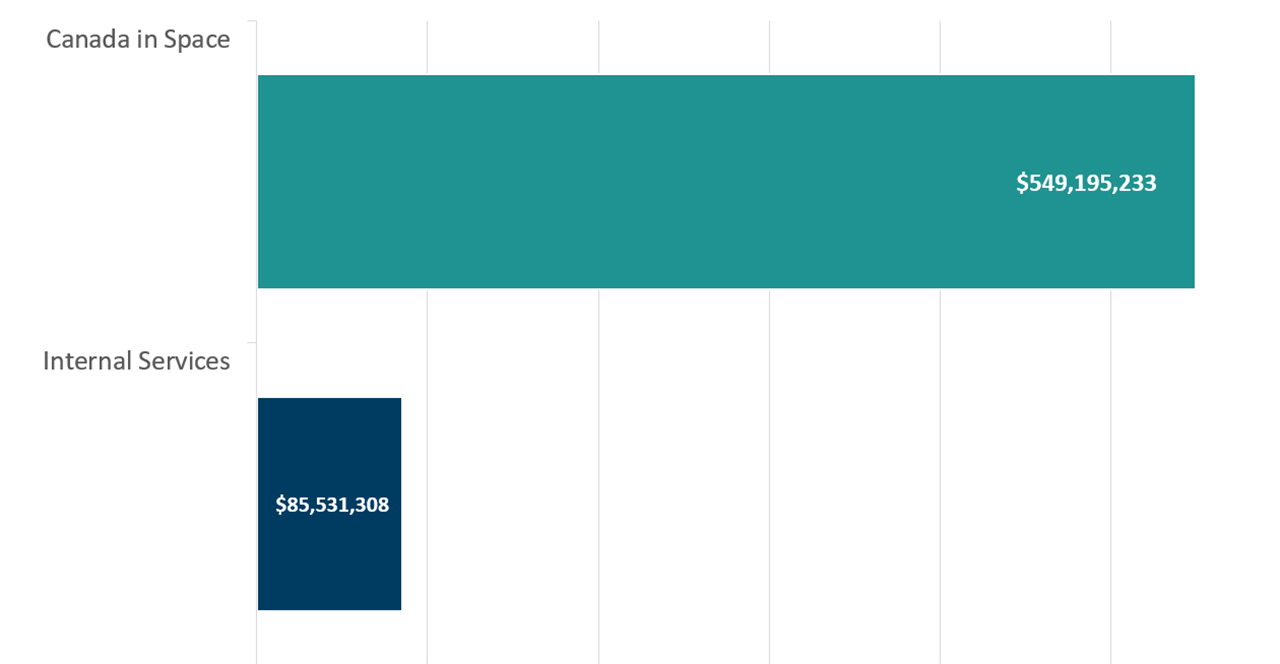
Graph 1 presents how much the department spent in – to carry out core responsibilities and internal services.
Text version of Graph 1
This histogram graph depicts spending in – for the core responsibility Canada in Space and the internal services:
- Total spending for Canada in space was $549,195,233.
- Total spending for internal services was $85,531,308.
Analysis of actual spending by core responsibility
The above charts note that, for –, the CSA spent $549,195,233 on its core responsibility (Canada in space) and $85,531,308 on internal services.
Refocusing Government Spending
In Budget , the government committed to reducing spending by $14.1 billion over five years, starting in –, and by $4.1 billion annually after that.
As part of meeting this commitment, the CSA identified the following spending reductions.
- -: $11,087,139
- -: $21,543,000
- - and after: $17,240,000 annually
During -, the CSA worked to realize these reductions through the following measures:
- Reduce travel expenses and some professional services
- Rationalize CSA's technical services and space operations capacities
- Reduce investments in CSA's existing space capacity development funding programs and activities aiming at preparing new space missions and focus on delivering current approved missions
Budgetary performance summary
Table 7: Actual three-year spending on core responsibilities and internal services (dollars)
| Core responsibilities and internal services | – Main Estimates | – total authorities available for use | Actual spending over three years (authorities used) |
|---|---|---|---|
| Canada in Space | 349,012,257 | 670,543,959 |
|
| Internal services | 64,955,212 | 71,343,711 |
|
| Total | 413,967,469 | 741,978,670 |
|
Analysis of past three years of spending
The CSA reprofiled $107.2M in –, of which 94% ($100.9M) is related to capital project funding envelopes (including the risk budget) that are reprofiled to future years via available carry-forward mechanisms. This is an inherent part of project management within the Canadian Space Program; for –, 100% of lapsed funds are reprofiled to future years.
The actual spending variances in – to – in the table above are mainly attributable to:
- Net increase from – to – in Canadarm3 announced in the Budget.
- Net decrease from – and – in Canadarm3, due to continued changes to the Gateway's project requirements in concert with international partners and economic challenges related to supply chain delays.
- Net increase from – to – in Canadarm3 for the Definition and Implementation phases.
- Beginning with the – Departmental Plan, in line with practice amongst OGDs, the CSA has updated the methodology for allocating resources under its core responsibility and internal services. This new methodology better reflects the role that these resources play to support the Agency's core responsibility – Canada in Space and will be used in future publications. This - DRR is aligned with the legacy methodology, and many of the resources identified as internal services are directly involved with program delivery.
The Finances section of the Infographic for the CSA's on GC Infobase offers more financial information from previous years.
Table 8 Planned three-year spending on core responsibilities and internal services (dollars)
| Core responsibilities and internal services | – planned spending | – planned spending | – planned spending |
|---|---|---|---|
| Canada in space | 778,010,952 | 782,140,193 | 528,154,661 |
| Internal services | 56,069,879 | 55,376,360 | 56,079,080 |
| Total | 834,080,831 | 837,516,553 | 584,233,741 |
Analysis of the next three years of spending
The variance between – and – in the "Planned three-year spending on core responsibilities and internal services" table above is mainly attributable to:
- New investment: Funding announced in Budget to support the ISS Program through .
- Net decrease in Canadarm3 investments: originally announced in Budget , with additional funding anticipated in the coming years.
- Net decrease in Gateway External Robotics interfaces (GERI) investments.
- Efforts to implement the second phase of the “Refocusing Government Spending” initiative introduced in Budget .
- Net decrease in WildFireSat investments: Initially announced in Budget , with further funding expected in future years.
The Finances section of the Infographic for the CSA on GC Infobase offers more detailed financial information related to future years.
Funding
This section provides an overview of the department's voted and statutory funding for its core responsibilities and for internal services. Consult the Government of Canada budgets and expenditures for further information on funding authorities.
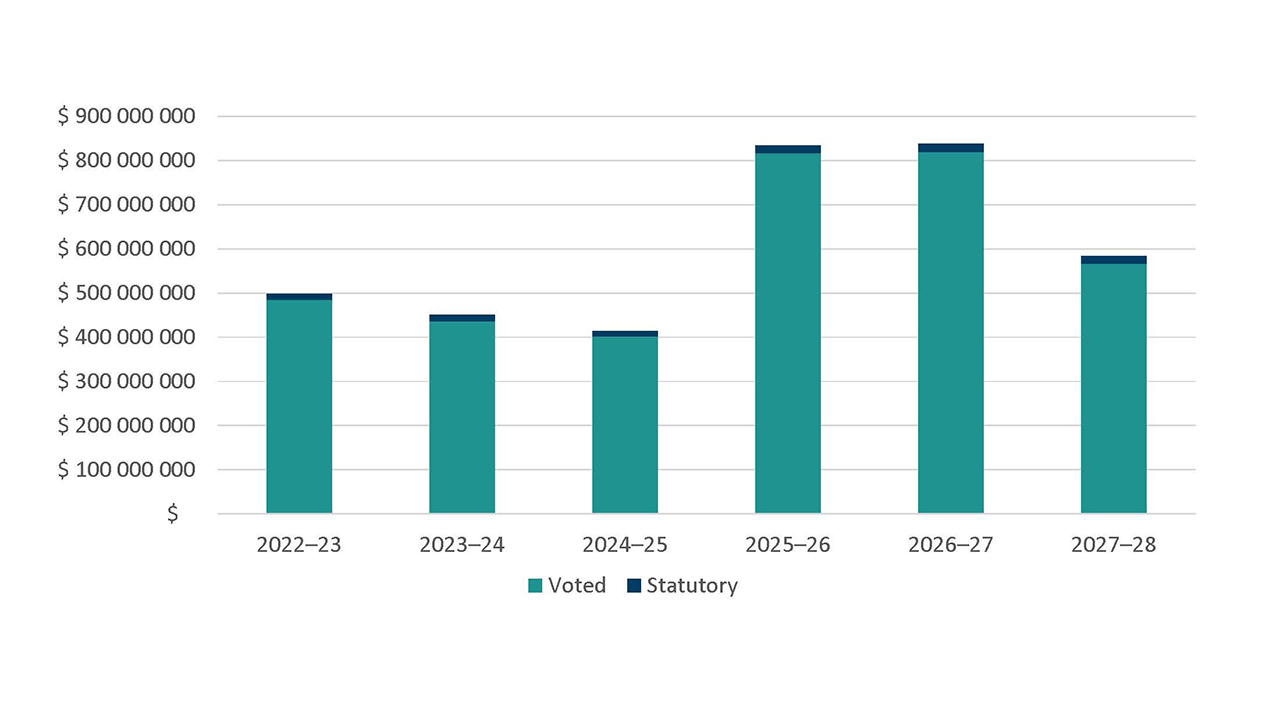
Graph 2 summarizes the department's approved voted and statutory funding from – to –.
Text version of graph 2
| Fiscal year | Statutory | Voted | Total |
|---|---|---|---|
| - | $13,194,601 | $485,040,895 | $498,235,495 |
| - | $14,493,023 | $436,254,186 | $450,747,210 |
| - | $12,154,248 | $401,813,221 | $413,967,469 |
| - | $17,358,225 | $816,722,606 | $834,080,831 |
| - | $17,350,408 | $820,166,145 | $837,516,553 |
| - | $17,110,030 | $567,123,711 | $584,233,741 |
Analysis of statutory and voted spending over a six-year period
Spending variances are primarily attributable to specific funds allocated to the following initiatives in which funding exceeded the CSA's ongoing resource allocations.
- In accordance with the Budget announcements, and with $379M in new funds earmarked in the Budget , additional funding of $318M over eight years beginning in – has thus far been authorized to support activities on board the ISS and to fulfill Common Systems Operations Costs related to the extension of Canada's participation in the ISS until , in accordance with international treaty obligations.
- Additional funding of $25.1M spread over six years starting in – for the QEYSSat project.
- Budget included additional funding of $150M over five years starting in – to carry out activities under LEAP.
- Funding of $142.2M was approved for LEAP 2.0 – Lunar Utility Vehicle (LUV). This funding is designated to build on advancements in autonomous and intelligent rovers from previous investments in surface mobility systems made more recently through LEAP phase 1, Lunar Rover Mission, and the Lunar Surface Exploration Initiative, amongst others.
- In accordance with announcements, $1.9B over 24 years was committed to the Canadarm3 as Canada's contribution to the NASA-led Gateway:
- funding of $27.4M spread over four years starting in – to undertake the first definition phase of the Canadarm3 project and STEM activities
- funding of $335.3M for fiscal years –23 and – to undertake the second definition phase of the Canadarm3 project
- funding of $939.2M, from ($1.13B, from – to –) was accessed during fiscal year – to undertake the detailed definition phase as well as implementation phase and preparation for delivery to NASA for a target launch date no earlier than .
- In accordance with Budget announcements, provide $1.1B over 14 years, starting in –, to continue Canada's participation in the ISS until , additional funding of $404M spread over 14 years starting in –.
- As announced in Budget , funding of $92.2M will support the WildFireSat Canadian Operational Mission initiative in collaborative effort involving the CSA, NRCan, and ECCC delivering a complete information system that will observe wildfires from space during peak burning periods. Funding will be used to design, build and operate a new wildfire monitoring satellite system.
- Budget announced new funding for Canada's initial utilization activities for Gateway. Funding of $72.2M was accessed through – to –.
- Funding of $68.9M was accessed from – to – to undertake the detailed project requirements phase (Phase A) of the Thin Ice Clouds and Far InfraRed Emissions (TICFIRE) instrument, to complete HAWCsat pre-project activities, and to implement the Science and Application initiatives as part of the High Altitude Aerosols, Water Vapour and Clouds (HAWC) mission – Canada's contribution to the NASA Atmospheric Observing System initiative.
- Funding of $80.3M was accessed from – to – to undertake the options analysis phase of the RADARSAT+ Next Generation initiative. This includes a thorough analysis of the next generation satellite system requirements, developing feasible concepts, and articulating comprehensive development plans that include implementation models, timelines and costs. This work will inform the government's plans on Canada's next generation satellite system – one that will maintain Canada's EO capabilities in the long term.
Consult the Public Accounts of Canada for further information on CSA's departmental voted and statutory expenditures.
Financial statement highlights
The CSA's Financial Statements (Unaudited) for the Year Ended .
Table 9 Condensed Statement of Operations (unaudited) for the year ended (dollars)
| Financial information | – actual results | – planned results | Difference (actual results minus planned) |
|---|---|---|---|
| Total expenses | 584,002,520 | 557,348,813 | 26,653,707 |
| Total revenues | 54,534 | 23,252 | 31,282 |
| Net cost of operations before government funding and transfers | 583,947,986 | 557,325,561 | 26,622,425 |
Analysis of expenses and revenues for -
Total planned expenses for – were $584M, a variance of $26.7M (4.8%) when compared to actual results of $557.3M. The variance between planned and actual expenses is mainly explained by:
- Salaries and employee benefits expenses, being higher than projected ($+29.6M);
- Rentals and acquisition of machinery and material expenses, being higher than projected ($+2.1 M);
- Amortization expenses of assets under construction, planned to be capitalized to capital assets in – , being lower than projected ($-5 M).
The – planned results information is provided in CSA's Future-Oriented Statement of Operations and Notes –.
Table 10 Condensed Statement of Operations (unaudited) for - and - (dollars)
| Financial information | – actual results | – actual results | Difference (- minus -) |
|---|---|---|---|
| Total expenses | 584,002,520 | 558,365,757 | 25,636,763 |
| Total revenues | 54,534 | 122,839 | -68,305 |
| Net cost of operations before government funding and transfers | 583,947,986 | 558,242,918 | 25,705,068 |
Analysis of differences in expenses and revenues between - and -
In –, total expenses were $584M: an increase of $25.6M (4.6%) when compared with the previous year's total expenses of $558.4M. This increase is primarily attributable to the following:
- An increase in salaries and employee benefits by $10.7M.
- An increase in Professional and special services by $8.5M;
- An increase in total transfer payments by $6.4M, mainly associated with the European Space Agency transfer payments.
The CSA's total expenses were incurred to pursue its two core responsibilities, shown below, and were mainly incurred in amortization of tangible capital assets $215.6M, salaries and employee benefits $136.6M and professional and special services $126M.
- Canada in Space $497.6M (85.2%)
- Internal Services $86.4M (14.8%)
The CSA's total revenues were $0.05M in – ($0.12M in –), which represents the re-spendable portion of overall revenues of $1M. Most of these revenues are reported under the sale of goods and services to private business and other Government of Canada departments and location and use of public property.
Table 11 Condensed Statement of Financial Position (unaudited or audited) as of (dollars)
| Financial information | Actual fiscal year (–) | Previous fiscal year (–) | Difference (– minus –) |
|---|---|---|---|
| Total net liabilities | 200,742,949 | 146,920,926 | 53,822,023 |
| Total net financial assets | 199,127,934 | 135,913,131 | 63,214,803 |
| Departmental net debt | 1,615,014 | 11,007,795 | -9,392,781 |
| Total non-financial assets | 1,288,959,643 | 1,225,955,647 | 63,003,996 |
| Departmental net financial position | 1,287,344,628 | 1,214,947,852 | 72,396,776 |
Analysis of department's liabilities and assets since last fiscal year
Total net liabilities of $200.7M consist mainly of accounts payable and accrued liabilities. These represent goods and services received at year-end but that have not yet been paid by the CSA. The $53.8M (65.1%) increase from – to – is normal as payment schedules may vary from one year to another, especially those related to space programs.
Total assets were $1,488 M at the end of – ($199M in net financial assets and $1,289M in non-financial assets), an increase of $126.2M mainly attributable to:
- Increase of $54.2M in the “Due from the Consolidated Revenue Fund (CRF)”, which represents the net amount of cash that the CSA is entitled to draw from the CRF without further authorities to discharge its liabilities.
- Increase of $9M in the Accounts receivable and advances.
- Increase of $63M in tangible capital assets (mainly for the asset under construction Canadarm3).
Non-financial assets are mainly composed of space-related assets ($1.1B over $1.29B).
Human resources
This section presents an overview of the department's actual and planned human resources from – to –.
Table 12: Actual human resources for core responsibilities and internal services
| Core responsibilities and internal services | – actual FTEs | – actual FTEs | – actual FTEs |
|---|---|---|---|
| Canada in Space | 459.5 | 507.7 | 516.2 |
| Internal services | 373.9 | 429.3 | 470.5 |
| Total | 833.4 | 937.0 | 986.7 |
The number of FTEs in Canada in Space increased by 12%, which is lower than planned due to the staffing challenges in space science and technology resulting from high demand in these specialty areas. Internal services have increased by 26% due to the need to support increasing complexity, growth and supports required in the Space Program delivery and core responsibilities, including adopting an increased cybersecurity posture in our day-to-day work, space assets, intellectual property, critical data, as well as the reputation of the Canadian space sector due to the current threat environment.
Analysis of human resources over the last three years
The variance from – to – is mainly due to the increased personnel required to deliver on Canadian Space Program projects announced by the Government. This includes increased personnel in programs, as well as internal services that support these programs.
The number of FTEs in Canada in Space increased by 12% while Internal Services have increased by 26%. This is due to the need to support increasing complexity, growth and supports required in the Space Program delivery and core responsibilities, including increased security and financial stewardship requirements. The CSA's deep space missions – including Gateway, Artemis, LUV and more – as well as increasingly complex EO projects represent new challenges in an everchanging threat environment.
Due to the legacy methodology used in the - Departmental Plan, many FTEs directly involved with program delivery are identified as internal services in this DRR. An updated methodology that better reflects the alignment of FTEs to programs has been implemented with the - Departmental Plan.
Table 13: Human resources planning summary for core responsibilities and internal services
| Core responsibilities and internal services | – planned FTEs | – planned FTEs | – planned FTEs |
|---|---|---|---|
| Canada in Space | 665.8 | 675.4 | 664.0 |
| Internal services | 378.5 | 374.5 | 375.7 |
| Total | 1,044.3 | 1,049.9 | 1,039.7 |
Analysis of human resources for the next three years
The variations from - to – are primarily due to an increase in personnel to support the implementation of expanded activities under the Canadian Space Program. This includes growth in program-specific roles. As of –, the CSA has changed the allocation for FTEs under its core responsibility and internal services. This change better reflects the role that these FTEs play to support the Agency's core responsibility – Canada in Space.
Supplementary information tables
The following supplementary information tables are available on the CSA's website:
Federal tax expenditures
The tax system can be used to achieve public policy objectives through the application of special measures such as low tax rates, exemptions, deductions, deferrals and credits. The Department of Finance Canada publishes cost estimates and projections for these measures each year in the Report on Federal Tax Expenditures. This report also provides detailed background information on tax expenditures, including descriptions, objectives, historical information and references to related federal spending programs as well as evaluations and GBA Plus of tax expenditures.
Corporate information
Departmental profile
Appropriate minister:
The Honourable Mélanie Joly, P.C., M.P.
Institutional head:
Lisa Campbell, President
Ministerial portfolio:
Innovation, Science and Economic Development
Enabling instrument(s):
Year of incorporation / commencement:
Established in
Other:
The CSA was established in . The Agency's headquarters are located at the John H. Chapman Space Centre, in Longueuil, Quebec. Other CSA workplaces include offices in the National Capital Region, and liaison offices in Houston, Washington, and Paris.
Departmental contact information
Mailing address:
6767 Route de l'Aéroport
Borough of Saint-Hubert
Longueuil, Quebec
J3Y 8Y9
Telephone:
(450) 926-4800
Fax:
(450) 926-4352
Email:
Website(s):
Definitions
List of terms
- appropriation (crédit)
- Any authority of Parliament to pay money out of the Consolidated Revenue Fund.
- budgetary expenditures (dépenses budgétaires)
- Operating and capital expenditures; transfer payments to other levels of government, departments or individuals; and payments to Crown corporations.
- core responsibility (responsabilité essentielle)
- An enduring function or role of a department. The departmental results listed for a core responsibility reflect the outcomes that the department seeks to influence or achieve.
- Departmental Plan (plan ministériel)
- A report on the plans and expected performance of an appropriated department over a 3-year period. Departmental Plans are usually tabled in Parliament each spring.
- departmental priority (priorité)
- A plan or project that a department has chosen to focus and report on during the planning period. Priorities represent the things that are most important things to be done or those to be addressed first to help achieve the desired departmental results.
- departmental result (résultat ministériel)
- A high-level outcome related to the core responsibilities of a department.
- departmental result indicator (indicateur de résultat ministériel)
- A quantitative measure that assesses progress toward a departmental result.
- departmental results framework (cadre ministériel des résultats)
- A framework that connects the department's core responsibilities to its departmental results and departmental result indicators.
- Departmental Results Report (rapport sur les résultats ministériels)
- A report outlining on a department's actual accomplishments against the plans, priorities and expected results set out in the corresponding Departmental Plan.
- Full-time equivalent (équivalent temps plein)
- Measures the person years in a departmental budget. An employee's scheduled hours per week divided by the employer's hours for a full-time workweek calculates a full-time equivalent. For example, an employee who works 20 hours in a 40-hour standard workweek represents a 0.5 full-time equivalent.
- Gender-based analysis plus (GBA Plus) (analyse comparative entre les sexes plus [ACS Plus])
- An analytical tool that helps to understand the ways diverse individuals experience policies, programs and other initiatives. Applying GBA Plus to policies, programs and other initiatives helps to identify the different needs of the people affected, the ways to be more responsive and inclusive, and the methods to anticipate and mitigate potential barriers to accessing or benefitting from the initiative. GBA Plus goes beyond biological (sex) and socio-cultural (gender) differences to consider other factors, such as age, disability, education, ethnicity, economic status, geography (including rurality), language, race, religion, and sexual orientation.
- government priorities (priorités pangouvernementales)
- For the purpose of the – Departmental Results Report, government priorities are the high-level themes outlining the government's agenda as announced in the Speech from the Throne.
- horizontal initiative (initiative horizontale)
- A program, project or other initiative where two or more federal departments receive funding to work collaboratively on a shared outcome usually linked to a government priority, and where the ministers involved agree to designate it as horizontal. Specific reporting requirements apply, including that the lead department must report on combined expenditures and results.
- Indigenous business (entreprise autochtones)
- For the purposes of a Departmental Result Report, this includes any entity that meets the Indigenous Services Canada's criteria of being owned and operated by Elders, band and tribal councils, registered in the Indigenous Business Directory or registered on a modern treaty beneficiary business list.
- non‑budgetary expenditures (dépenses non budgétaires)
- Net outlays and receipts related to loans, investments and advances, which change the composition of the financial assets of the Government of Canada.
- performance (rendement)
- What a department did with its resources to achieve its results, how well those results compare to what the department intended to achieve, and how well lessons learned have been identified.
- performance indicator (indicateur de rendement)
- A qualitative or quantitative measure that assesses progress toward a departmental-level or program-level result, or the expected outputs or outcomes of a program, policy or initiative.
- plan (plan)
- The articulation of strategic choices, which provides information on how a department intends to achieve its priorities and associated results. Generally, a plan will explain the logic behind the strategies chosen and tend to focus on actions that lead to the expected result.
- planned spending (dépenses prévues)
- For Departmental Plans and Departmental Results Reports, planned spending refers to the amounts presented in Main Estimates. Departments must determine their planned spending and be able to defend the financial numbers presented in their Departmental Plans and Departmental Results Reports.
- program (programme)
- Individual or groups of services, activities or combinations thereof that are managed together within the department and focus on a specific set of outputs, outcomes or service levels.
- program inventory (répertoire des programmes)
- A listing that identifies all the department's programs and the resources that contribute to delivering on the department's core responsibilities and achieving its results.
- result (résultat)
- An outcome or output related to the activities of a department, policy, program or initiative.
- statutory expenditures (dépenses législatives)
- Spending approved through legislation passed in Parliament, other than appropriation acts. The legislation sets out the purpose and the terms and conditions of the expenditures.
- target (cible)
- A quantitative or qualitative, measurable goal that a department, program or initiative plans to achieve within a specified time period.
- voted expenditures (dépenses votées)
- Spending approved annually through an appropriation act passed in Parliament. The vote also outlines the conditions that govern the spending.